
Before You Order Sustainable Tees in Toronto: Demand GOTS, Ink Specs
A Toronto checklist for genuinely sustainable t shirt orders: verify GOTS certification, ink and curing specs, confirm local blanks, and request a...
Before You Order Sustainable Tees in Toronto: Demand GOTS, Ink Specs
Yes, you can get genuinely sustainable custom t-shirts printed in Toronto. The reader should prioritize verified material origin, either GOTS certification or made-in-Canada sourcing, plus a printer willing to disclose ink type and curing process in writing. Before committing to any order, ask for those specs and a physical sample. If a shop hedges on either, keep looking.
TL;DR:
- Verified GOTS certification and domestic sourcing are essential for ensuring actual sustainability in Toronto T-shirts; avoid shops that hesitate to disclose these details.
- The environmental impact depends on fiber, ink chemistry, and supply chain; a combination of organic, water-based inks, and local production offers the best eco profile.
- Ask printers specific questions about fiber content, certification, ink types, curing processes, and shipping logistics in writing to verify sustainability claims.
- Water-based screen printing and low-VOC DTF methods are more eco-friendly than plastisol but require shop transparency about chemical use and washfastness.
- Higher costs for certified and locally sourced options reflect real supply chain expenses, and ordering samples beforehand prevents costly misreliance on marketing labels.
Table of Contents
- What Makes T-Shirt Printing Actually Sustainable in Toronto
- What to Ask a Toronto Printer Before You Order
- Sustainable Screen Printing, DTF, and DTG: How the Methods Compare
- GOTS Certification, Fabric Weight, and Why Made-in-Canada Blanks Matter
- What Sustainable Printing Actually Costs and How Long It Takes
- Why This Checklist Beats Trusting a Label
- Start a Sustainable Print Order With Local Toronto Options
- Where to Verify These Sustainability Claims
- Sources
- FAQ
What Makes T-Shirt Printing Actually Sustainable in Toronto
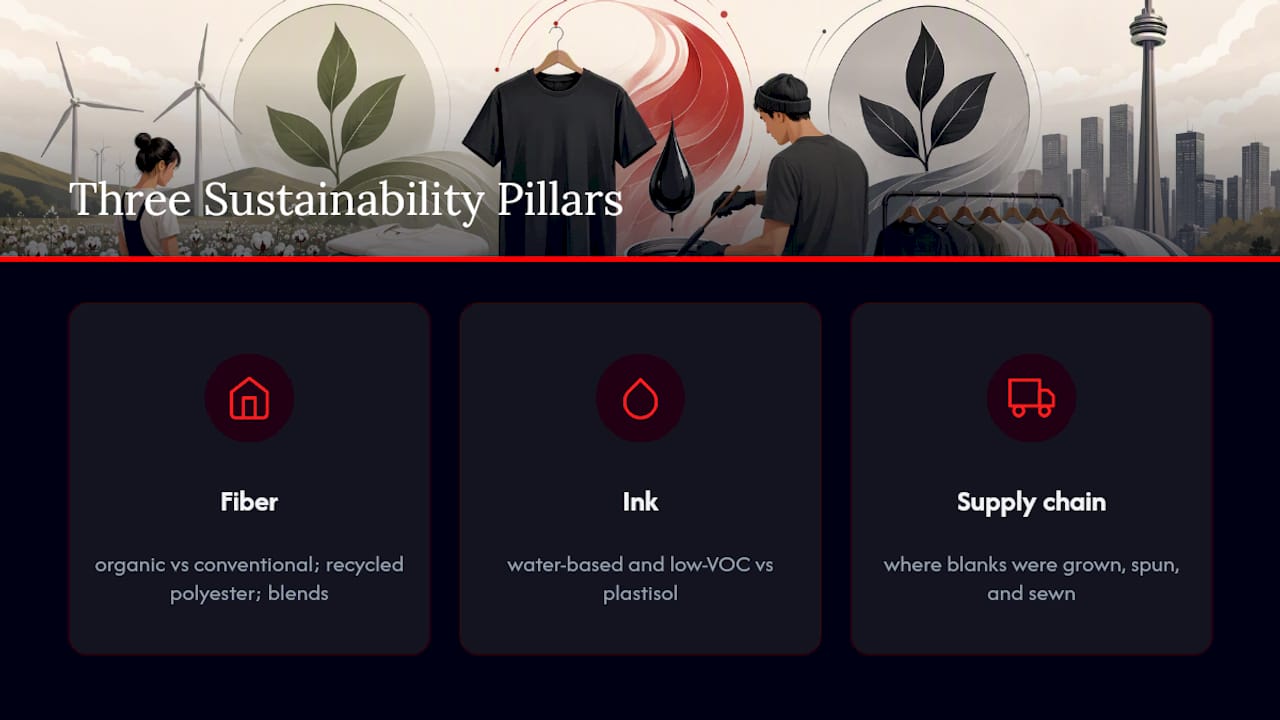
The phrase “sustainable t-shirt printing Toronto” gets tossed around loosely, so it helps to separate marketing language from measurable claims. In the printing industry, sustainability rests on three checkable pillars: the fiber (organic versus conventional cotton, recycled polyester, or blends), the ink chemistry (water-based and low-VOC versus plastisol), and the supply chain (where the blank garment was grown, spun, and sewn before it ever reached a print table).
None of those three exist in isolation. A GOTS-certified organic tee printed with solvent-heavy plastisol ink and shipped from overseas isn’t a clean sustainability story. Neither is a locally sewn blank printed with water-based ink but made from conventional, pesticide-intensive cotton. The honest answer is that eco-friendly t-shirt printing in Toronto means stacking good decisions across all three categories, not finding one silver-bullet certification and stopping there.
This is also where the industry’s standard vocabulary matters. “Sustainable” is a marketing term; “GOTS-certified,” “OEKO-TEX,” and “water-based pigment ink” are verifiable claims a printer can back up with documentation. Learning to ask for the second kind of language, instead of accepting the first, is the real skill here.
What to Ask a Toronto Printer Before You Order
Most greenwashing falls apart the moment you ask a specific question instead of accepting a vague label like “eco-conscious.” Treat any quote request as an interview, not just a price check.
- Material verification: Ask for the fiber content by percentage, any GOTS or OEKO-TEX documentation, and the country where the blank garment was made.
- Ink and process disclosure: Ask whether they use water-based, discharge, or plastisol inks, how curing is done, and how wastewater or excess ink is handled.
- Local footprint: Ask about pickup options in your area and whether blanks are sourced domestically or imported.
- Ordering logistics: Ask about sample availability, minimum order quantities, turnaround time, reprint policy, and whether packaging is recyclable or minimal.
- Red flags: Be wary of any shop that answers “eco-friendly” without naming a certification, refuses to send a sample, or can’t tell you what ink family they run.
Pro Tip: Ask every printer the same five questions in writing, by email, not just on a phone call. A shop confident in its sourcing will answer in two sentences. A shop that’s greenwashing will stall or send you a general sustainability statement instead of specifics.
A printer that treats these questions as reasonable, rather than intrusive, is usually the one worth trusting with your order.
Sustainable Screen Printing, DTF, and DTG: How the Methods Compare
The environmental profile of a shirt depends heavily on how it’s printed, not just what it’s made of. Toronto shops typically offer a handful of methods, and each carries a different trade-off.
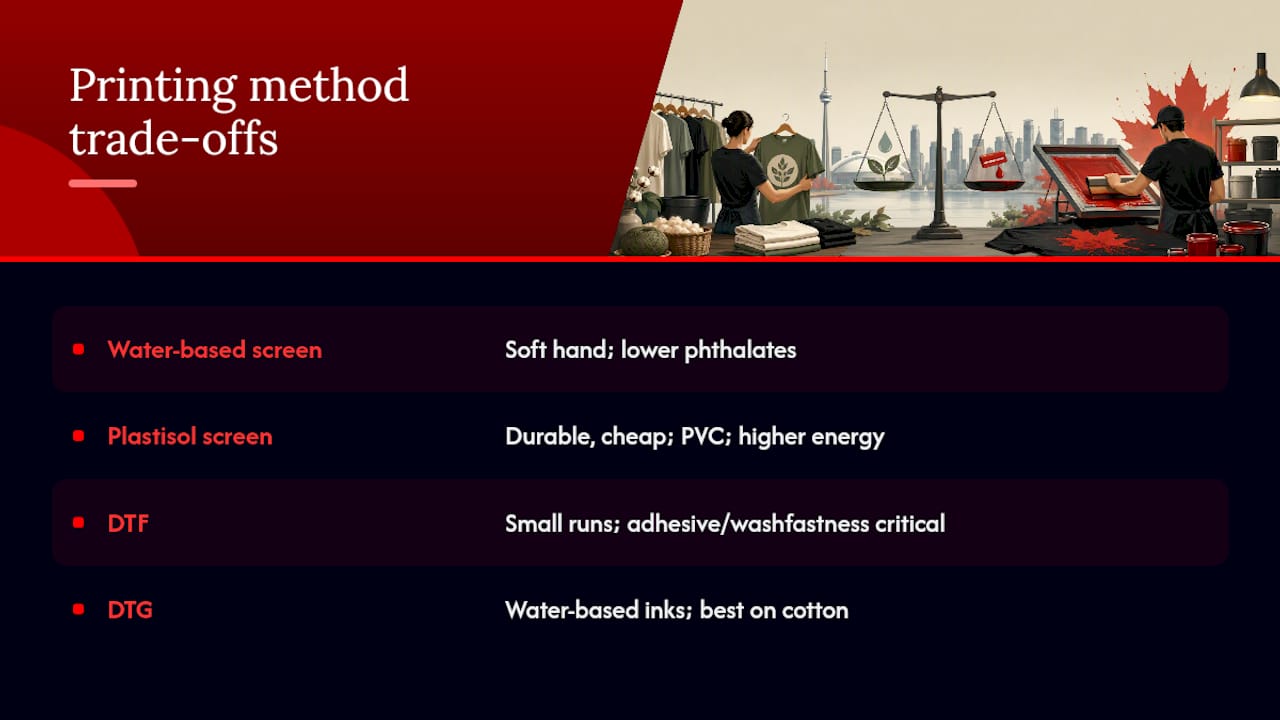
Water-based screen printing pushes ink pigment into the fabric fibers rather than laying a plastic film on top. It produces a softer hand feel, avoids the phthalates common in plastisol, and generally uses less water in cleanup than older processes, though it still depends on how a shop manages rinse water and reclaim chemicals.
Plastisol screen printing remains the industry default because it’s durable and cheap, but it’s PVC-based and requires higher curing temperatures, meaning more energy per run and a print that eventually cracks or peels rather than biodegrading cleanly.
DTF (direct-to-film) printing, which Toronto Custom T-Shirts offers through its gang sheet printing service, transfers a printed film onto fabric using heat and an adhesive powder. DTF is efficient for small runs and full-color designs with no screens to burn, but its sustainability hinges on the adhesive resin used and how well it holds up over repeated washes. Ask what adhesive is used and whether the shop has washfastness data. An adhesive that fails after a dozen washes forces a reprint, and a reprint erases whatever environmental savings the method offered.
DTG (direct-to-garment) prints digitally straight onto fabric, similar to an inkjet printer, and typically uses water-based inks. It works best on high cotton content and struggles with vibrancy on blends or dark fabrics without a heavier ink deposit.
For most eco-focused orders, water-based screen printing suits simple, high-volume designs, while a certified low-VOC DTF process fits detailed, full-color, or small-batch work. The deciding question isn’t which method sounds greener on paper. It’s which one a specific shop can back up with real ink and adhesive documentation.
GOTS Certification, Fabric Weight, and Why Made-in-Canada Blanks Matter
GOTS, the Global Organic Textile Standard, is the benchmark certification for organic fiber content and processing, and GOTS-certified 100% organic cotton tees are available in the Toronto market. Certification covers more than the raw cotton. It also restricts the chemicals allowed during dyeing, bleaching, and finishing, which matters because a shirt can technically start as organic cotton and still pick up conventional chemical treatments downstream.
A quick sustainability comparison:
| Material | Durability | Environmental trade-off |
|---|---|---|
| GOTS organic cotton (~8oz/170gsm) | High, heavier weave resists tearing | Higher water use to grow, but no synthetic pesticides |
| Recycled polyester | Moderate, can pill over time | Diverts plastic waste, but sheds microfibers when washed |
| Cotton/poly blends | High | Cheaper, but harder to recycle at end of life |
That 8oz weight shows up often in GOTS-certified tees sold locally, and it’s not incidental. A heavier fabric resists pilling and tearing, which means the garment survives more washes before it’s discarded, and a shirt that lasts three years instead of one is a better sustainability outcome than a thinner, cheaper alternative regardless of its fiber origin.
Sourcing location compounds this. Local yarn-to-finish production within the GTA cuts down the transport distance a garment travels before printing, and Canadian brands already produce GOTS-certified tees this way. Research on freight logistics shows sea transport choices can swing a T-shirt’s carbon footprint by a wide margin, which is the practical case for choosing a Made-in-Canada blank over an imported one when both are otherwise comparable. Imported organic cotton still beats non-certified domestic cotton on the fiber question, but if you can get both organic and local, that combination wins on both fronts.
What Sustainable Printing Actually Costs and How Long It Takes
Three factors drive price on an eco-focused order: material certification, print complexity, and volume. GOTS-certified blanks cost more than conventional cotton because certified organic farming yields less per acre and the chain-of-custody paperwork adds overhead. Multi-color designs, full coverage prints, and specialty placements like sleeve or back prints add labor and ink cost on top of that.
- Set your budget priorities first. If certified material matters most to you, put your money there and simplify the print. A single-color front design on a GOTS tee often costs less overall than a five-color print on a cheaper blank once ink and setup time are factored in.
- Expect small runs to move faster than bulk orders. A handful of custom shirts can often turn around within a couple of days when using DTF, while bulk business or event orders need more lead time for screen setup and quality checks.
- Choose local pickup where it’s offered. Picking up in Mississauga or elsewhere in the GTA avoids the emissions and packaging waste tied to shipping, and it’s usually faster than waiting on a courier.
- Request a sample before committing to volume. A small paid sample run costs little compared to reprinting a hundred shirts that don’t meet expectations.
Higher cost on a certified or locally sourced order isn’t automatically a red flag. It’s often the honest price of the supply chain claims being made.
Why This Checklist Beats Trusting a Label
Most articles on this topic tell you to “look for eco-friendly certifications” and stop there. That advice undersells how much a printer’s process matters after the certified blank arrives at their shop. A shirt can start as GOTS-certified organic cotton and still end up printed with solvent-heavy ink, cured at high heat with no ventilation controls, and shipped in single-use plastic. The certification covers the fabric. It says nothing about what happens on the print floor.
That’s the gap this checklist is built to close. Fiber certification and ink transparency are two separate questions, and a shop that’s strong on one but silent on the other hasn’t earned your trust yet. The most reliable filter isn’t a logo on a hangtag. It’s whether a printer will put material and ink specs in writing before you pay, and whether they’ll send a physical sample for verification instead of asking you to take their word for it.
Buyers who skip that step tend to discover the gap after the order ships, when the “eco” shirt fades fast or the fabric feels nothing like what was advertised. Ask first. It costs nothing and it’s the one habit that separates buyers who get what they paid for from those who got a marketing pitch printed on cotton.
— Toronto
Start a Sustainable Print Order With Local Toronto Options
Some local Toronto printers offer sustainable printing options without agencies or middlemen, which can mean faster answers about material and ink questions, no minimum order quantity for small eco-conscious runs, and local pickup options that reduce shipping emissions.
If you want a low-carbon, small-batch order, the DTF gang sheet printing service supports full-color designs with no screens to set up, and you can ask directly about the adhesive and ink specs before you order. Running a team, event, or business order at volume? The bulk order page lists per-shirt pricing from $15.00 to $24.90 depending on quantity and print placement, with add-ons like back and sleeve prints priced separately. For readers who want to skip customization entirely, the Ready-Made Drops collection offers pre-designed apparel ready to ship or pick up. Request a sample, ask for material specs in writing, and place your order with a 48-hour turnaround built in.
Where to Verify These Sustainability Claims
Check the GOTS certification standard directly to confirm what organic labeling actually covers. For the transport-emissions case behind local sourcing, the Fibre2Fashion coverage on freight and carbon footprint lays out the numbers. For ink chemistry alternatives beyond what a single printer offers, this ink alternatives guide is a useful reference for further reading.
Sources
- Global Organic Textile Standard (GOTS) certification — Eurofins Sustainability Services
- Sea freight cuts T-shirt carbon footprint by up to 60% — Fibre2Fashion
FAQ
Is Sustainable T-Shirt Printing Available in Toronto?
Yes. Toronto has printers offering GOTS-certified organic cotton, water-based ink options, and locally sourced blanks. The key is confirming certification and ink type directly with the printer rather than assuming a shop is eco-friendly from marketing language alone.
What Does GOTS Certification Actually Guarantee?
GOTS certifies organic fiber content and restricts the chemicals allowed during dyeing and finishing. GOTS-certified organic cotton tees sold in Toronto commonly weigh around 8oz (170gsm), a heavier weight associated with better durability.
Is DTF Printing Environmentally Friendly?
DTF printing can be a lower-waste option since it skips screen setup, but its footprint depends on the adhesive resin and washfastness. Ask a printer offering DTF gang sheet printing what adhesive they use and whether it holds up over repeated washing.
How Much Does Eco-Friendly T-Shirt Printing Cost in Toronto?
Cost depends on material certification, print complexity, and order size. Torontocustomtshirts lists DTF-printed custom tees from $15.00 to $24.90 per shirt depending on volume, with gang sheet transfers starting from $0.40 per transfer.
Does Local Sourcing Really Reduce a T-Shirt’s Carbon Footprint?
Yes, in most cases. Transport is often a larger factor in a garment’s footprint than people assume, and freight-related research shows shipping choices can meaningfully change total emissions, which supports choosing Made-in-Canada blanks when they’re available.
Recommended
Get pricing in 24h.
Toronto-based, no minimums. Tell us about your project and we'll email a detailed quote within one business day.
Request a Quote