Group T-Shirt Size Breakdown: Calculator Ready Counts for 25, 50, and 100
Calculator-ready t-shirt size breakdown with exact counts for 25, 50, and 100 orders, plus adjustment rules, a 5 to 10% buffer plan, and local printer tips.
Group T-Shirt Size Breakdown: Calculator Ready Counts for 25, 50, and 100
That’s your starting point for a general group with no strong skew toward one gender or age range. Shift the numbers if your crowd runs mostly men, mostly women, or includes kids, and lean on the calculator method and buffer guidance below to nail down the exact count for your order size.
TL;DR:
- Most adult orders should favor ordering extra large sizes over small to reduce waste and accommodate slightly larger fit preferences.
- For small orders under 20 shirts, use a fixed ratio of sizes rather than percentages to ensure proper distribution.
- Adjust the default size breakdown based on your group’s demographics, leaning toward smaller sizes for women and youth, and larger ones for men.
- Always verify garment size charts for the specific brand and style, especially if switching suppliers or ordering athletic fits, to prevent sizing errors.
- Collect actual size information beforehand when possible, and order a 5 to 10 percent buffer of extra shirts for last-minute changes, primarily in medium and large sizes.
Table of Contents
- What Is the Standard T-Shirt Size Breakdown?
- How Do You Calculate Size Counts for Any Order?
- How Do You Adjust the Mix for Your Group?
- How Do You Collect Sizes and Cover Shortfalls?
- How Do You Measure for the Right T-Shirt Size?
- How a Local Printer Handles Bulk Size Breakdowns
- Sources
What Is the Standard T-Shirt Size Breakdown?
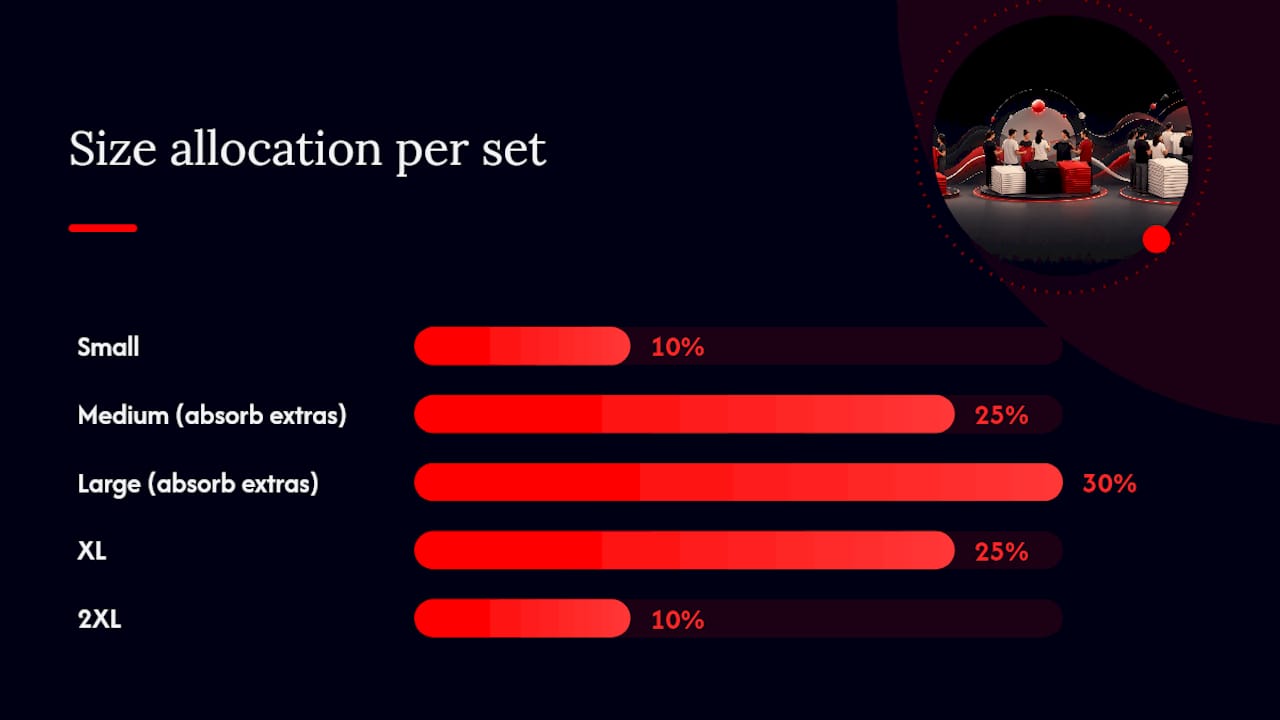
That 10/25/30/25/10 split isn’t a guess. It reflects recommended percentages used by multiple bulk-order calculators, and it lines up with what large printers see across thousands of group orders: Medium, Large, and XL make up the bulk of adult demand, while Small and 2XL trail behind.
Here’s what that looks like translated into real counts for three common order sizes.
- 25 shirts: roughly 3 Small, 6 Medium, 8 Large, 6 XL, 2 2XL.
- 50 shirts: roughly 5 Small, 12 Medium, 15 Large, 13 XL, 5 2XL.
- 100 shirts: roughly 10 Small, 25 Medium, 30 Large, 25 XL, 10 2XL.
Notice the totals don’t always land on a clean whole number when you multiply percentages by 25 or 50. When that happens, round up Medium, Large, and XL first, since those sizes almost always get used. Round down on Small and 2XL if you’re trying to stay under budget.
That’s the safer direction to lean, too. A shirt that’s slightly big still gets worn, maybe with a cuffed sleeve or a tuck. A shirt that’s too small usually ends up donated, returned, or sitting in a drawer. Ordering one extra Large instead of one extra Small costs you nothing in usability and saves you an awkward exchange conversation later.
How Do You Calculate Size Counts for Any Order?
The math is the same no matter how many shirts you’re ordering: total order size multiplied by the percentage for each letter size gives you your count. That’s 60 times 0.25, or 15 Mediums.
- Multiply total quantity by each size’s percentage (10%, 25%, 30%, 25%, 10%).
- Round fractional results up for M, L, and XL; round down for S and 2XL if you need to trim the total.
- Add the five numbers back up to confirm they match your original order count.
Small orders are where this math gets messy. Try running the formula on an order of 15 shirts and you’ll get numbers like 1.5 Small and 3.75 Medium, which don’t mean anything on a purchase order. Calculators handle this by rounding up, but for anything under about 20 shirts, skip the percentages entirely and use the ratio instead: 1 Small, 2 Medium, 3 Large, 2 XL, 1 2XL. Multiply that ratio by however many “sets” you need to approximate your total.
Pro Tip: If your order total doesn’t divide evenly into the 1:2:3:2:1 ratio, add the leftover shirts to Medium or Large. Those two sizes absorb extra units without throwing off your overall fit.
How Do You Adjust the Mix for Your Group?
The 10/25/30/25/10 default assumes a mixed adult audience. Real groups rarely look like that, so adjust before you order:
- Mostly men: shift weight toward Large, XL, and 2XL, trimming Small down to 5% or less.
- Mostly women: shift toward Small, Medium, and Large, since women’s and unisex sizing both run smaller on average.
- Kids or youth teams: use a youth-specific size run (YS through YXL) rather than adult smalls, which fit differently through the shoulders and sleeve length.
- Athletic or fitted-cut garments: bump everyone up roughly one size from their usual pick, since slim cuts run tighter through the chest and arms than a standard tee.
Brand fit varies more than people expect. A Large from one manufacturer can fit like a Medium from another, so always check the specific product size chart before finalizing quantities, especially if you’re switching garment styles from a previous order. Cotton blends can also shrink slightly after the first wash, which matters if your group is ordering close to the line between two sizes.
How Do You Collect Sizes and Cover Shortfalls?
Guessing at sizes is how organizers end up with nine Mediums nobody claims. Where possible, collect actual sizes before you order:
- Add a size field to your event registration or RSVP form.
- For teams or staff, send a quick size survey with a deadline before the print run locks in.
- If some people won’t respond in time, fall back on the default breakdown for the unknown portion of your order.
Even with good size data, order a 5 to 10% buffer on top of your confirmed count, and concentrate that buffer in Medium, Large, and XL, the sizes most likely to cover a last-minute addition or a swap request. For larger events, this buffer planning matters even more, since latecomers and staff additions tend to scale with headcount.
Pro Tip: Keep two or three extra shirts in the most common sizes on hand at pickup or event day. A five-minute swap beats a reprint order every time.
How Do You Measure for the Right T-Shirt Size?
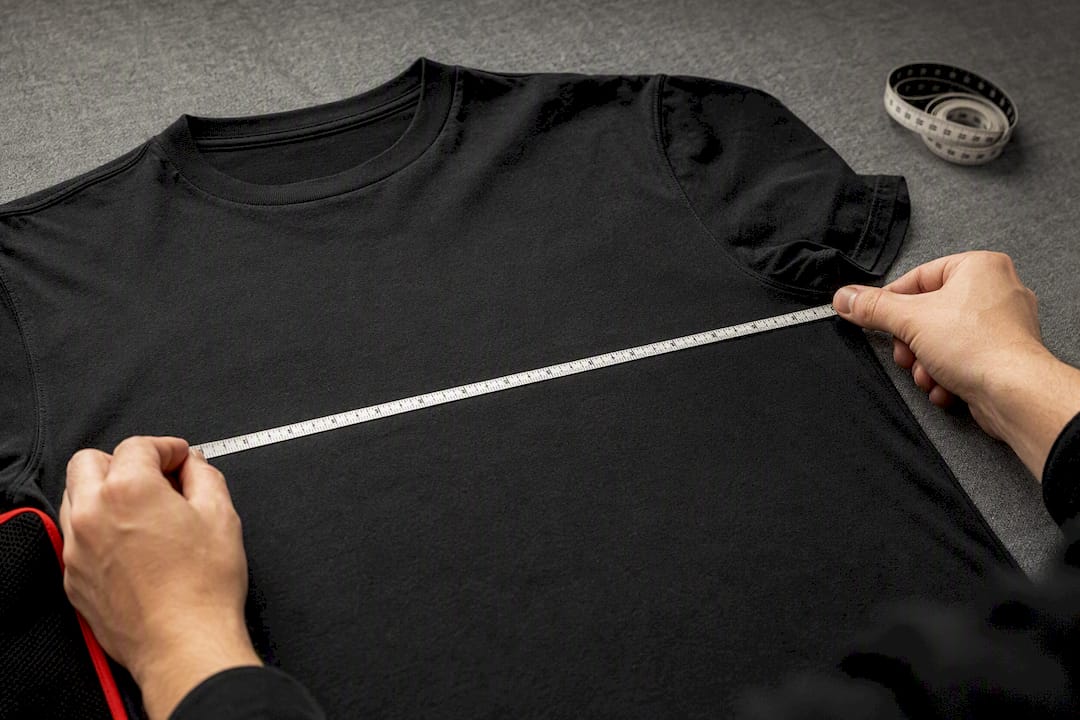
When you don’t have a vendor’s chart handy, measure a shirt you already know fits well. Lay it flat and measure straight across the chest, one inch below the armhole, then double that number for the full body width. Measure length from the highest point of the shoulder seam down to the hem. Comparing those two numbers against a vendor’s chart is far more reliable than guessing off the size printed on a tag, since tag sizes vary between brands.
If someone’s measurement falls between two rows, size up for a relaxed fit or size down for something more fitted. Teams ordering uniforms should also check sizing guidance built specifically for coaches and rosters, since athletic cuts often run tighter through the shoulders than a standard tee.
How a Local Printer Handles Bulk Size Breakdowns
Bulk orders are typically handled through a straightforward process: collect sizes upfront, confirm the design and size chart together, proof the order, then print with rush turnaround or standard timing depending on the deadline. The most common mistake we see is organizers guessing at a size split instead of collecting real numbers, or skipping the size chart entirely when switching garment styles between orders.
If you want help sorting out quantities before you commit to a print run, our bulk order page covers volume pricing and pickup options for Toronto and the GTA.
— Toronto
Sources
- T-Shirt size breakdown calculator: how many of each?
- How To Order The Right T-Shirt Sizes For Groups
- How Many T-shirts to Order in Each Size - Quick Calculator
Recommended
Get pricing in 24h.
Toronto-based, no minimums. Tell us about your project and we'll email a detailed quote within one business day.
Request a Quote