
GTA Organizers: Event T Shirt Quantities, Packing & Buffers
Practical size mixes, buffer rules, and packing tips for event T shirts. GTA fulfillment includes size sorted packing and pickup.
GTA Organizers: Event T Shirt Quantities, Packing & Buffers
The real rule that matters more than any ratio: collect actual sizes at registration whenever you can, and fall back to the ratio-plus-buffer method only when you can’t. Confirmed sizes beat any preset, every time.
TL;DR:
- Confirm actual shirt sizes at registration whenever possible to ensure the most accurate order and avoid relying solely on preset ratios.
- Scale size distributions proportionally when adjusting total order based on event growth, rather than estimating or recalculating from scratch.
- Adjust size ratios for specific event types, increasing larger sizes for corporate events and emphasizing youth sizes for school events to match demographic trends.
- Add a buffer of 10 to 15 percent for small events under 100 people, and lower percentages as event size increases to minimize the risk of shortages.
- Collect size data early, set clear deadlines, and prepare pre-sorted packaging to streamline distribution and prevent last-minute chaos.
Table of Contents
- Event T-Shirt Quantities: Size Distribution Templates You Can Copy
- How to Calculate Event T-Shirt Order Quantities
- What Changes the Size Mix for Different Event Types
- Buffer Stock, Extra Headcounts, and Minimum Orders
- Collecting Accurate Sizes Before You Order
- Packing, Sorting, and Distribution Logistics
- An Organizer’s Checklist Before You Sign Off on an Order
- Get Your Event Order Sorted Before Deadline Day
- Sources
Event T-Shirt Quantities: Size Distribution Templates You Can Copy
That starter ratio isn’t a guess pulled from thin air. It matches the preset distributions built into event T-shirt calculators, which pull from years of aggregated order data across mixed adult groups. If you’re planning for 300 people with no other information, this is your default:
- XS: 4% (12 shirts)
- S: 18% (54 shirts)
- M: 30% (90 shirts)
- L: 26% (78 shirts)
- XL: 14% (42 shirts)
- XXL: 6% (18 shirts)
- 3XL: 2% (6 shirts)
Pro Tip: Scale the ratio, not the total shirt count. If your event grows from 300 to 450 people, multiply every percentage by 1.5 rather than eyeballing new numbers for each size. It keeps the proportions honest.
Two situations call for a different template entirely. Athletic events, like 5K races or cycling rides, skew smaller because runners and cyclists tend to order tighter fits, so shift weight toward S and M and trim your XXL and 3XL allotment. Youth and family events need a completely separate youth-size breakdown layered on top of adult sizing, since kids’ shirts run on a different chart altogether. Corporate conferences flip the other direction: attendees tend to run larger, so nudge more inventory into L and XL and lighten up on XS and S. When in doubt, drop your extended sizes (XXL, 3XL) only if past attendance data shows minimal demand there. Cutting them to save money is the fastest way to run short on the people who need them most.
How to Calculate Event T-Shirt Order Quantities
Converting percentages into actual order counts is simple math, but the rounding and buffer steps trip up a lot of first-time organizers.
- Multiply your total headcount by each size percentage. For 250 attendees, Medium at 30% gives you 75 shirts.
- Round to the nearest whole number, then check your supplier’s minimum order rules. Many printers sell in dozens, so 75 might need to become 72 or 84 depending on how they batch.
- Add your buffer on top of the rounded total, not before. A 5% buffer on 75 mediums means 3 to 4 extra, landing you at 78 or 79 rather than a buffer calculated off a pre-rounded number.
- Repeat across every size, then total the full order and sanity-check it against your budget before submitting.
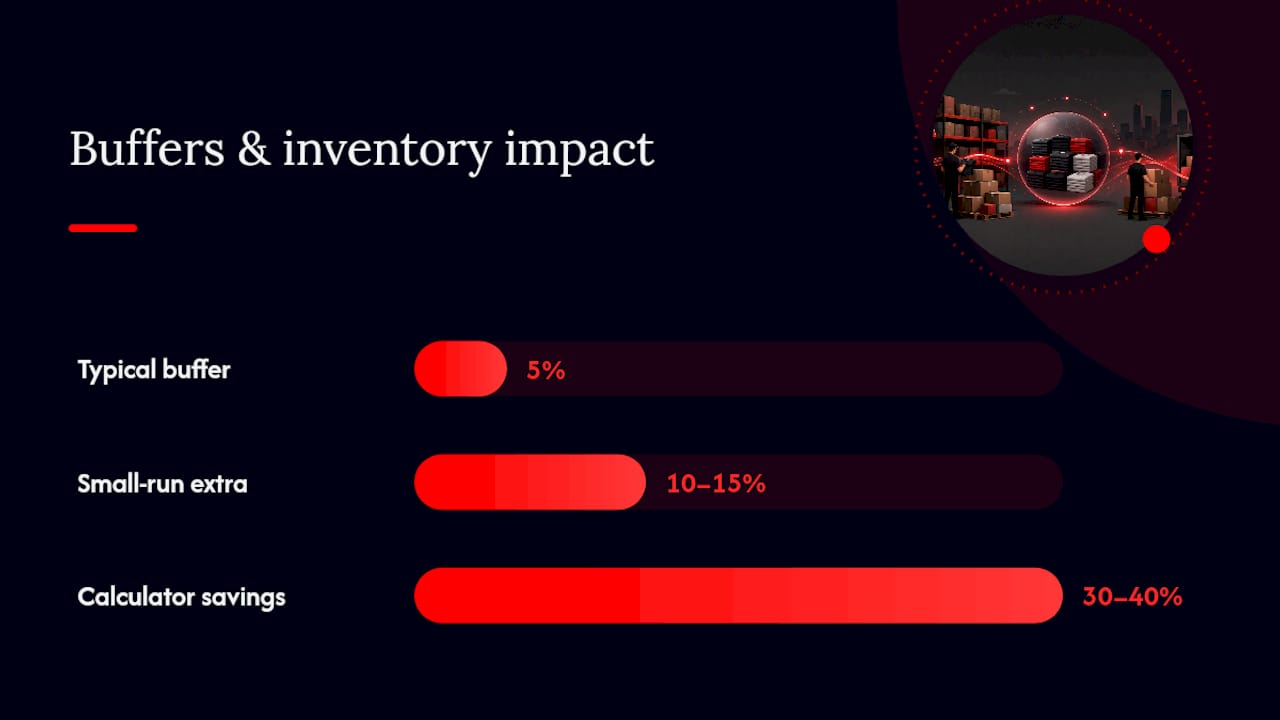
Smaller runs under 100 people need 10 to 15% extra because a single miscounted registration swings your percentages more.
Pro Tip: Run your numbers through a size-distribution calculator template before finalizing anything. Providers of these tools claim organizers using preset calculators cut surplus inventory by 30 to 40% compared with guessing off a generic chart, since the math forces you to confront rounding and buffer decisions up front instead of after the invoice arrives.
What Changes the Size Mix for Different Event Types
The default ratio assumes a generic mixed-adult crowd, and that assumption breaks the moment your event skews toward a specific demographic. A few signals should push you to adjust before you ever open a calculator:
- Race or fitness event: athletic cuts run smaller, and participants often size down on purpose for a snugger fit.
- Corporate conference: professional crowds trend older and larger, with more demand in L through XXL.
- Youth program or school event: requires a youth size chart layered separately from adult sizing, not a scaled-down version of the same ratio.
- Trade crew or field team: durability matters more than fit precision, and unisex cuts dominate over fitted styles.
- Music festival or general public event: widest variance in age and body type, so buffer stock matters more than a perfect ratio.
Gender split changes things too. A roster that’s mostly women will shift demand toward smaller sizes if you’re ordering unisex cuts, since women’s bodies typically run a size or more smaller in unisex fits than the standard men’s-cut chart assumes. If you have last year’s registration data or attendance records for a recurring event, use those numbers over any generic preset. Historical data reflects your actual crowd; a universal ratio reflects nobody’s crowd in particular.
Buffer Stock, Extra Headcounts, and Minimum Orders
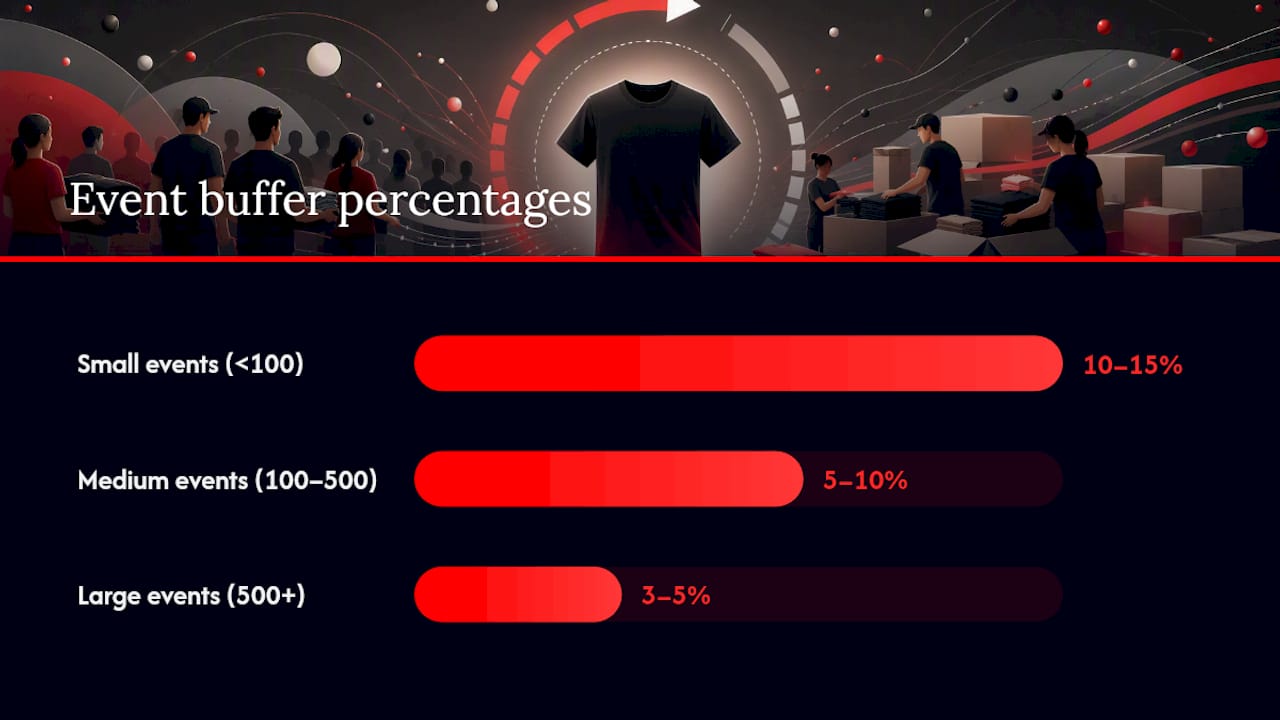
Your buffer percentage should scale inversely with event size. Small events need proportionally more cushion because a handful of wrong guesses represents a bigger share of the total order.
- Small events (under 100 people): add 10 to 15% buffer.
- Medium events (100 to 500): add 5 to 10%.
- Large events (500+): add 3 to 5%, since volume naturally absorbs small errors.
Team-specific orders follow a slightly different rule: small teams should add just 1 to 2 extra shirts rather than a percentage, while larger teams add 5 to 15% depending on expected roster turnover.
Beyond attendees, keep a separate tally for staff, volunteers, speakers, sponsors, and VIPs. These are your event’s visible ambassadors, and forgetting them mid-order is one of the most common last-minute scrambles organizers run into. On minimums, most printers batch in dozens, so round your per-size totals up to the nearest 12 rather than leaving odd numbers that trigger a manual adjustment or a re-quote.
Collecting Accurate Sizes Before You Order
The single best thing you can do for order accuracy is skip the guesswork entirely and ask people directly.
- Add a size field to your registration form, using standard S through 3XL labels rather than measurements. Most people know their shirt size faster than their chest measurement.
- Set a hard deadline for size confirmation that gives your printer enough lead time, typically 7 to 10 business days before your event depending on order volume.
- Build a fallback for late registrants. RSVP-based estimates using your default ratio can cover the last 5 to 10% of stragglers who miss the deadline.
Pro Tip: If someone registers too late for the print run, offer an on-site exchange table or a post-event mail-out for the correct size. A small logistics fix like this turns an out-of-stock moment into a reason people remember your event fondly instead of resentfully.
Packing, Sorting, and Distribution Logistics
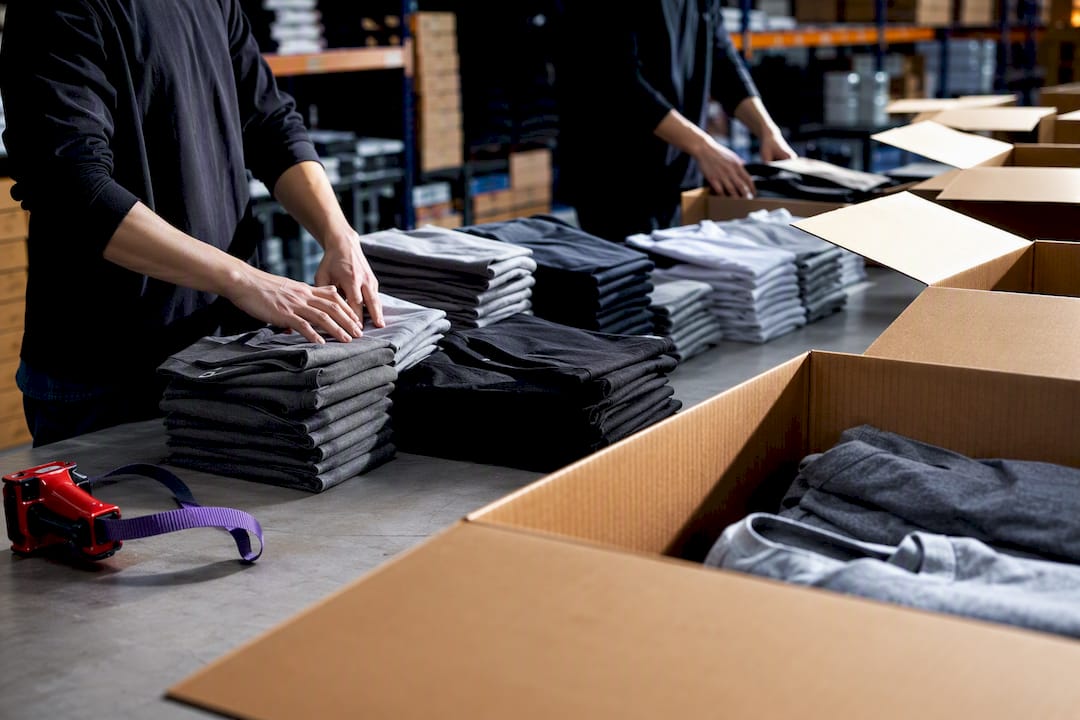
Getting the count right doesn’t matter much if the shirts arrive in one giant unsorted box on event morning. Request pre-sorted packaging from your printer, either size-labeled bundles or individually bagged shirts, before your order goes into production. It typically costs a small add-on fee but saves hours of manual sorting on-site.
- Label bundles clearly by size and, if relevant, by pickup group (staff versus general attendees).
- Assign one person as distribution lead so there’s a single point of accountability if sizes run short.
- Set up an exchange table near the main check-in area for quick swaps without disrupting the flow of arrivals.
- Keep your buffer stock separate and visible, not mixed into the general pile, so it’s easy to reach for and easy to track.
An Organizer’s Checklist Before You Sign Off on an Order
The mistake we see most often: organizers order for the invited headcount instead of the confirmed headcount, then wonder why medium runs out by 11 a.m. Second mistake: forgetting the event team entirely, then scrambling for extra staff shirts the week of.
Before signing off, check: confirmed sizes collected, buffer applied by event size, staff and volunteers counted separately, and supplier minimums rounded correctly. Torontocustomtshirts prints event orders across Mississauga, Toronto, and the GTA with size-sorted packing built into the process.
— Toronto
Get Your Event Order Sorted Before Deadline Day
Torontocustomtshirts turns the planning above into a finished order without you chasing a printer for status updates. Bulk event orders come with volume discounts, rush turnaround when your deadline is tight, and packing options that sort shirts by size before they ever leave our shop, so your distribution table runs the way it should on event day.
Local pickup is available in Mississauga, or we ship across the GTA if your team can’t make it in. If a size runs short on the day, a small non-apparel consolation item like custom drinkware can smooth things over while you arrange a mail-out. Ready to lock in your count? Visit our bulk order page to request a quote, confirm minimums against your size breakdown, and get a production timeline that fits your event date.
Sources
- Event T‑Shirt Quantity Calculator – Online by Size Distribution
- Custom Event T-Shirts: How Many Should You Order?
- How Many Shirts to Order for a Team: The Coach’s Guide
Recommended
Get pricing in 24h.
Toronto-based, no minimums. Tell us about your project and we'll email a detailed quote within one business day.
Request a Quote