Measure First: Unisex vs Women's T Shirt Fit: 6 Steps Before Printing
Use six flat measurements and a shoulder first check to compare unisex and women's T shirt fits, and avoid costly custom print mistakes.
Measure First: Unisex vs Women’s T Shirt Fit: 6 Steps Before Printing
If you want a straighter cut with more room through the body, go unisex. If you want shaping at the waist and a shorter, narrower fit, go women’s. Either way, the fastest way to size correctly is to stop guessing from letter sizes and instead lay a favorite tee flat, measure it, and compare those numbers to the finished-garment chart before you buy or order a sample.
TL;DR:
- Comparing flat measurements from your favorite shirts to supplier specs ensures accurate sizing, especially since size labels vary across brands.
- Shoulder seam placement and body length are more critical than chest width for a comfortable fit on any shirt.
- Women’s fit tapers at the waist and has a shorter length, making it more suitable for body-shaping without excess fabric.
- Unisex tees tend to be heavier, less stretchy, and longer, offering durability and a looser, streetwear look.
- For custom orders, always request finished-garment measurements and order a sample before large batch printing to prevent sizing issues.
Table of Contents
- Unisex vs Women’s Fit T-Shirts: How the Patterns Actually Differ
- How Do You Measure a T-Shirt to Compare Fits?
- Which Fit Should You Choose Based on Body Type and Style?
- How to Pick Sizes When Ordering Custom or Printed T-Shirts
- Real Fit Checks: How Toronto Custom T-Shirts Reduces Sizing Risk
- Do Unisex and Women’s T-Shirts Feel Different in Fabric?
- Why Do Unisex T-Shirts Fit Women Poorly Sometimes?
- Do Brands Define Unisex and Women’s Fit the Same Way?
- Does Fit Change How Comfortable a T-Shirt Feels During Activity?
- Why Fit Decisions Are a Trust Problem, Not a Labeling Problem
- Get the Fit Right Before You Print
- Sources
- FAQ
Unisex vs Women’s Fit T-Shirts: How the Patterns Actually Differ
The difference between these two fits starts on the pattern table, not the size chart. Unisex t-shirts are built from a straighter block: the shoulders run wider, the armholes sit lower and looser, and the side seams drop nearly straight down from armpit to hem. Women’s fit patterns cut all of that away. The shoulder seams pull in, the armhole gets reshaped and raised slightly, and the side seam curves inward at the waist before flaring back out at the hip, according to a pattern-level breakdown from PodPartner.
That waist taper is the real signature of a women’s cut. It’s also why two people with the same chest measurement can need different women’s sizes: women’s wear grading typically separates bust and waist as distinct points, so someone with more waist definition may size differently than someone with the same chest circumference but a straighter torso.
When you’re checking a shirt for fit, three cues matter more than the number on the tag:
- Shoulder seam placement. It should sit at or near the bony edge of your shoulder, not halfway down your arm.
- Chest and bust ease. How much room exists between the fabric and your body when it’s laid flat and doubled.
- Body length. Whether the hem lands at the hip or lower, since unisex tees typically run longer.
Shoppers tend to fixate on chest width, but shoulder placement and length usually decide whether a shirt feels right. A shirt with generous chest room but shoulder seams sitting past your actual shoulder will always look borrowed, no matter how well the width fits.
How Do You Measure a T-Shirt to Compare Fits?
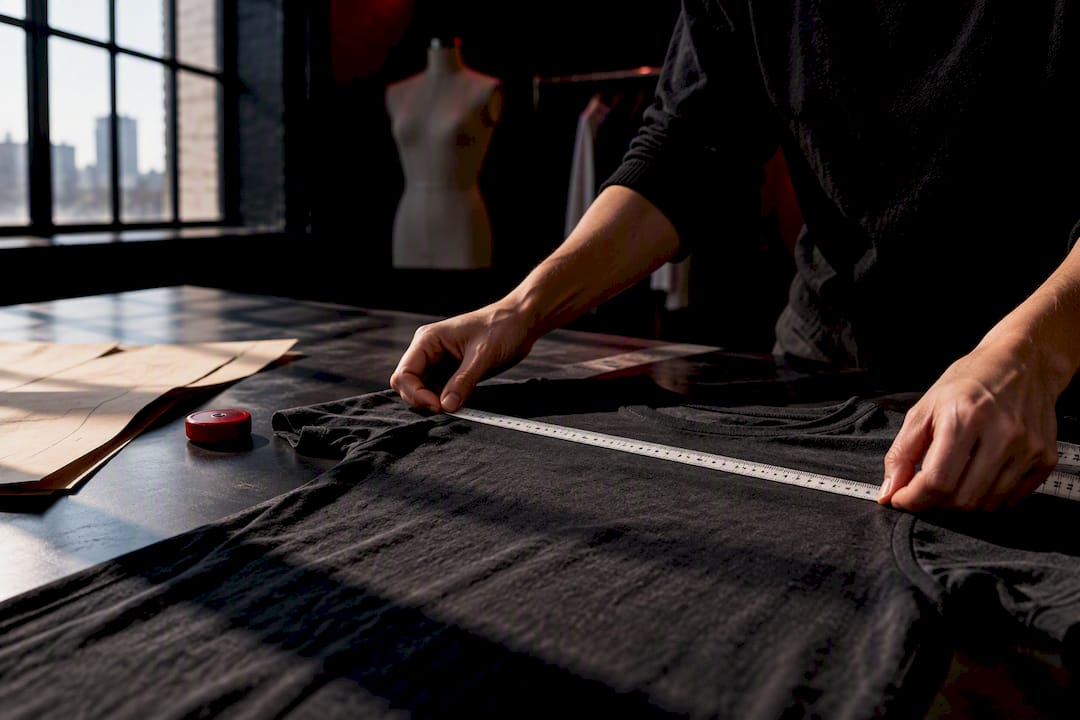
You don’t need a tailor’s kit, just a tape measure, a flat table, and a shirt you already like. Here’s the sequence that actually works:
- Measure your body first. Wrap the tape around the fullest part of your chest or bust, keeping it level and snug but not tight. Do the same at your natural waist and at your hip.
- Measure shoulder to shoulder across your back, from the edge of one shoulder bone to the other.
- Lay your favorite tee flat on a table, smoothed out with no wrinkles.
- Measure the chest width by placing the tape from armpit seam to armpit seam, then double it. That’s your circumference equivalent.
- Measure the body length from the highest point of the shoulder seam straight down to the hem.
- Compare those flat numbers against the supplier’s spec chart, which is exactly how ISO 8559-1:2017 defines the anthropometric measurement points that most garment charts are built around.
The trick that trips people up: a “laid flat” chest width of 19 inches doesn’t mean a 19 inch chest. Double it, and you get the actual body circumference the shirt is cut to fit, plus whatever ease the designer built in. Skip that doubling step and you’ll consistently order too small.
Don’t default to “size down one” just because you’re moving from a unisex tee to a women’s cut. That rule only holds if the flat chest width on the women’s size actually matches the ease you liked in your unisex shirt. Compare the numbers directly instead of trusting the shortcut.
Pro Tip: Keep a spreadsheet of the flat chest width and body length from every shirt that’s fit you well. It turns every future purchase into a five-second comparison instead of a guess.
Watch for two common mistakes: measuring a stretched-out old shirt instead of a properly fitting one, and ignoring the tolerance range. Supplier spec sheets often build in variance of about plus or minus one inch, so a half-inch mismatch usually isn’t worth returning over.
Which Fit Should You Choose Based on Body Type and Style?
Fit guides consistently point to one rule above all others: check the shoulder before you check anything else. A shirt that nails your chest measurement but sits wrong at the shoulder will never feel right, no matter the size, according to Boring Label’s fit guide.
Beyond that shoulder-first check, body type and style goals point you in different directions:
- Lean or athletic builds usually do well in either fit, but a slim or regular women’s cut shows more shape without feeling tight.
- Straight or rectangular builds often prefer unisex regular fit, since there’s less waist to taper toward.
- Fuller midsections frequently fit better in a relaxed unisex cut or a women’s fit sized up one, since forcing a tapered waist onto more curve can pull at the seams.
- Shorter heights should pay close attention to body length. A unisex large might have the chest room you need but hang well past the hip.
- Broader or more muscular builds often need a unisex fit specifically for the shoulder and arm room, even if that means more room through the torso than they’d like.
Style intent matters just as much as body shape. Pick women’s fit when you want visible shape or a cropped, fitted silhouette. Pick unisex when you want a neutral, oversized, or streetwear-style look, or when you’re outfitting a mixed-gender group and want consistent print placement across sizes.
If you’ve sized up or down twice in the same fit and it still feels wrong, the fix usually isn’t another size. It’s switching fit categories entirely, from slim to regular, or unisex to women’s.
How to Pick Sizes When Ordering Custom or Printed T-Shirts
Custom orders raise the stakes, since you’re often committing to a batch of shirts before anyone tries one on. A short checklist prevents most of the regret:
- Request the finished-garment measurement chart from your printer before ordering, and compare it directly against a shirt you already know fits.
- Order one sample whenever you’re trying a new blank or a supplier you haven’t used before. Check the shoulder seam, hem length, and where your design actually lands on the chest.
- Standardize group orders around flat measurements, not just size labels, since a “medium” varies by brand and by whether it’s unisex or women’s cut.
- Factor body length into artwork placement. Shorter or more fitted cuts push a chest-height design higher up the torso; a longer unisex body shifts it slightly lower.
Pro Tip: For team or event orders, send everyone the flat chest-width chart instead of asking for “S, M, L.” People are far more accurate estimating themselves against a number than against a letter.
Real Fit Checks: How Toronto Custom T-Shirts Reduces Sizing Risk
Guesswork gets expensive at scale, which is why sizing information should be available before you commit to a print run. Some custom apparel providers publish finished-garment specs on product pages, offer sample printing before bulk orders, and provide live design previews so customers can see placement before checkout.
Two blanks illustrate the fit spectrum well. The Unisex DryBlend tee represents the classic straight-block unisex cut, wider through the shoulder and longer in the body. The Unisex Softstyle V-Neck leans softer and more fitted, closer to what shoppers expect from a semi-fitted style. Check each product page for exact flat measurements before ordering, and request a sample if you’re printing for a group.
Do Unisex and Women’s T-Shirts Feel Different in Fabric?
Construction gets most of the attention, but fabric choice shapes how a shirt actually feels once it’s on. Unisex blanks, especially the classic workwear-inspired styles, tend to lean toward heavier cotton with less stretch, built for durability and consistent print results across a wide size range. That’s part of why merch and print-on-demand vendors favor unisex blanks: the stiffer, more stable fabric holds ink and placement consistently from small to 3XL.
Women’s fit tees more often use blends with added spandex or a higher percentage of ring-spun cotton, giving the fabric more give at the waist and hip where the pattern already tapers. That stretch isn’t cosmetic. A curved seam needs some fabric flexibility to sit smoothly against the body instead of pulling or puckering at the taper points.
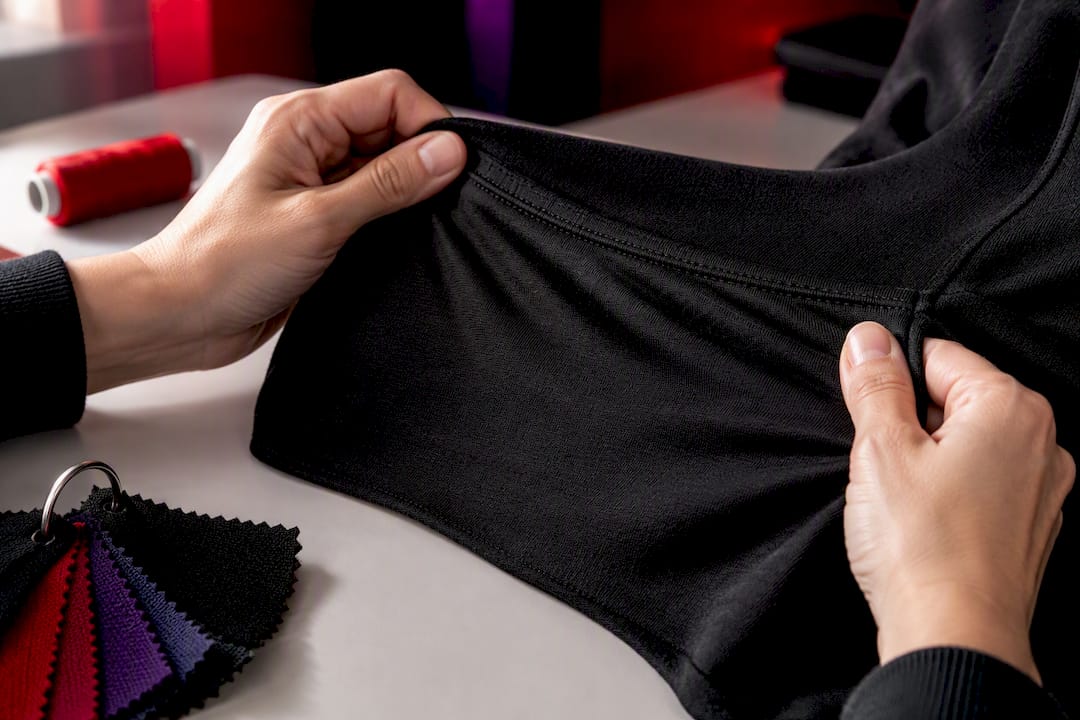
The tradeoff is durability versus drape. If you’re choosing between the two for a fitted, shaped look, prioritize a fabric with at least some stretch. If you want a shirt that holds up through years of washing and printing touch-ups, the sturdier unisex cotton blends tend to win.
Neither composition is objectively better. It depends on whether you’re optimizing for how the shirt looks on the body or how long it survives in a dresser drawer.
Why Do Unisex T-Shirts Fit Women Poorly Sometimes?
The most common complaint is a boxy, borrowed-from-a-sibling look, and it almost always traces back to the shoulder and armhole, not the overall size. Because unisex patterns are drafted wider at the shoulder and lower at the armhole, a size that fits a woman’s chest comfortably often leaves excess fabric bunching at the shoulder and underarm.
The second complaint is length. Unisex tees typically run longer than women’s cuts at the same letter size, which can make a shirt look more like a dress on a shorter frame.
Both issues are fixable without abandoning unisex shirts entirely:
- Size down and check the shoulder specifically, rather than sizing based on chest comfort alone, since the shoulder seam moves less predictably than chest width across sizes.
- Choose a fitted or relaxed-fit unisex line if the brand offers one, rather than the classic boxy cut.
- Tuck or half-tuck to manage extra length instead of buying a smaller size that then feels tight through the shoulder.
- Switch to a women’s cut when the goal is a shaped silhouette rather than a relaxed, neutral one. Fighting a straight block into looking fitted rarely works as well as choosing a pattern built for it.
None of this means unisex is a poor choice for women. It means matching the fit category to the goal, rather than assuming one gender label guarantees comfort.
Do Brands Define Unisex and Women’s Fit the Same Way?
No, and this is where a lot of frustration starts. “Unisex medium” from one brand can be noticeably different from “unisex medium” from another, because letter sizes aren’t standardized across suppliers; only the finished flat measurements are consistent within a brand’s own chart.
Some brands treat “women’s fit” as a light tweak, narrower shoulders and a slightly shorter body, with minimal waist shaping. Others build a genuinely curved silhouette with a pronounced waist taper and a raised armhole. Similarly, some “unisex” lines are really relabeled men’s patterns, while others are drafted from a genuinely neutral block designed to sit reasonably on a wider range of body shapes.
This is exactly why comparing flat measurements matters more than comparing size labels between brands. A size guide from a partner apparel resource reinforces the same point: read the spec sheet for the specific style you’re buying, not the general size chart the brand publishes for its whole catalog.
For anyone ordering across multiple product lines, whether that’s building a personal wardrobe or outfitting a team, get in the habit of pulling the finished-garment chart for the exact blank before ordering, every single time.
Does Fit Change How Comfortable a T-Shirt Feels During Activity?
Fit affects performance more than most people expect, and the two use cases pull in opposite directions. For exercise or high-movement activity, a shirt with too much room at the shoulder and armhole, common in relaxed unisex cuts, tends to shift and ride up during motion, and excess length can bunch under a waistband or gym bag strap. A slimmer or regular fit with a higher armhole moves with the body instead of flapping around it.
For all-day casual wear, the opposite priorities show up. A closer women’s fit that looks great standing still can start to feel restrictive by hour six, especially around the waist taper if you’ve eaten, sat for long stretches, or layered underneath it. Relaxed unisex fits earn their popularity here precisely because that extra ease disappears into the background instead of announcing itself every time you shift in a chair.
Layering adds one more variable. A snug women’s fit worn under a jacket or hoodie can pull uncomfortably at the shoulder seam once a second layer is added, while a slightly looser unisex base layer gives you room to add warmth without redoing your entire wardrobe. If you’re buying one shirt to cover workouts, errands, and layering, a regular fit in either category is the safer middle ground, according to fit guidance comparing slim, relaxed, and regular cuts.
Why Fit Decisions Are a Trust Problem, Not a Labeling Problem
Fit is the quiet driver of repeat purchases. A shirt that fits well gets worn weekly and reordered without complaint; one that fits poorly gets returned or forgotten in a drawer, regardless of print quality. Treating unisex versus women’s fit as a real design decision, not just a checkbox on a size chart, is what separates apparel people actually keep buying from apparel they buy once.
— Toronto
Get the Fit Right Before You Print
Some custom apparel providers skip the agency layer and the guesswork that comes with it. They may offer no minimum order quantity, fast turnaround, and online design, preview, and checkout options without waiting on a quote from a middleman.
Before committing to a full run, request the finished-garment measurements for your chosen blank and compare them against a shirt you already know fits. For anything beyond a single shirt, whether it’s a team order, an event, or a small merch drop, order a sample first and check the shoulder seam and print placement in person. Ready to move forward? Start your order through the DTF gang sheet and printing options page, or head to the bulk orders page if you’re outfitting a group and want group pricing on custom tees, back prints, or sleeve prints.
Sources
For measurement definitions, ISO 8559-1:2017 is the anthropometric standard much of the apparel industry references. For a real-world spec example, the Gildan Softstyle women’s sheet shows how finished measurements and tolerances actually appear on a supplier chart. For fit philosophy and the shoulder-first rule, Boring Label’s fit guide remains one of the clearest breakdowns available.
- ISO 8559-1:2017 - Size designation of clothes — Part 1: Anthropometric definitions for body measurement
- Gildan - Softstyle® Women’s V-Neck T-Shirt (spec sheet)
- T-Shirt Fit Guide: How a Tee Should Actually Fit — Boring Label
- Unisex vs women’s fit (pattern-level explanation) — PodPartner blog
FAQ
Are Unisex Sizes Bigger Than Women’s Sizes?
Generally yes. Unisex sizes tend to run wider through the shoulder and chest and longer in the body compared to a women’s size labeled the same letter, since women’s patterns add waist taper and narrower shoulders rather than simply scaling down a unisex block.
What Size Should I Get in a Unisex T-Shirt?
Measure your shoulder width and chest circumference, then compare those numbers against the brand’s flat, finished-garment chart rather than guessing from your usual letter size. Checking the shoulder seam placement matters more than chest comfort alone, since an oversized shoulder is the most common complaint with unisex cuts.
What Is the Equivalent Women’s Size for a Unisex Medium?
There’s no fixed conversion, because letter sizing varies by brand and by how much waist shaping the women’s line includes. Compare the unisex medium’s flat chest width and body length directly against the women’s size chart for that specific product, then pick whichever size matches those two number most closely.
How Do I Tell If a T-Shirt Is Men’s or Women’s?
Lay the shirt flat and check the side seam: a straight seam from armpit to hem usually signals a unisex or men’s cut, while a curved seam that pulls in at the waist and flares at the hip indicates a women’s fit. Shoulder width and overall body length are the other giveaways, since women’s fit runs narrower at the shoulder and shorter overall.
Recommended
Get pricing in 24h.
Toronto-based, no minimums. Tell us about your project and we'll email a detailed quote within one business day.
Request a Quote