Fast Local Pickup and Bulk Order Options: A Practical Guide
Discover Fast Local Pickup and Bulk Order Options! Choose curbside, express, or local courier services to streamline your orders.
Fast Local Pickup and Bulk Order Options: A Practical Guide
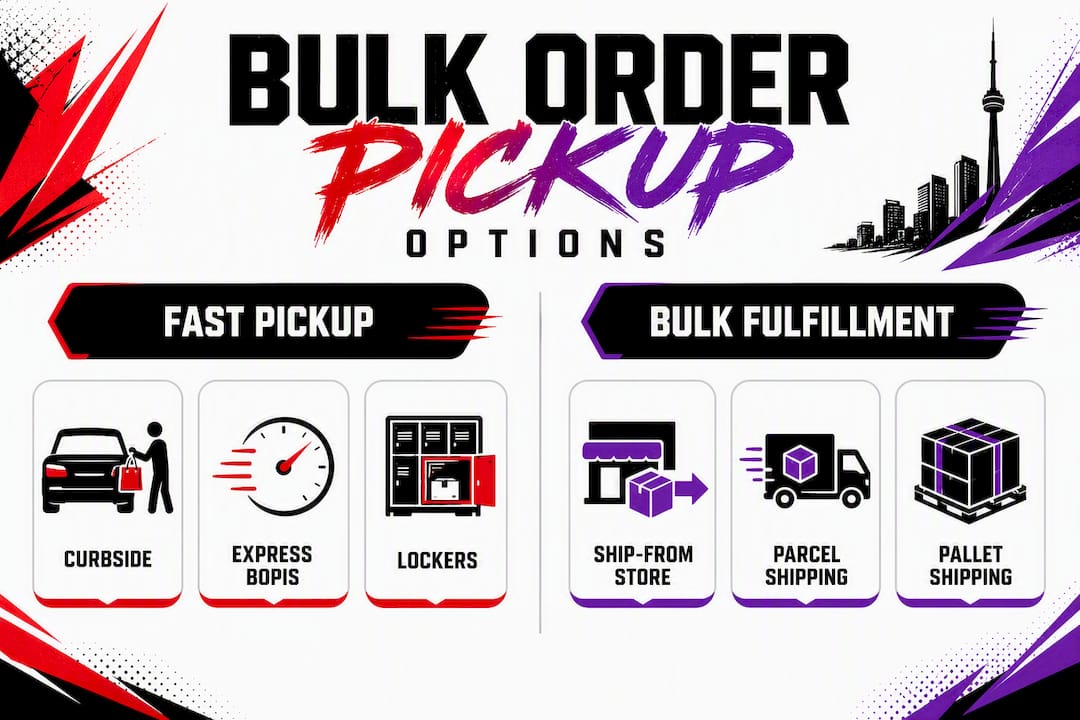
Curbside pickup and express in-store BOPIS (buy online, pick up in store) are the fastest local pickup options for most consumers, with many retailers making orders ready quickly. For bulk orders, ship-from-store and consolidated parcel or pallet shipping cut lead times the most when local inventory is pre-staged. Local courier platforms add same-day capacity for oversized or urgent loads.
Here is the short version by buyer type:
- Consumers: Choose curbside or express in-store pickup for speed. Most programs notify you by SMS when your order is ready shortly after confirmation.
- Small businesses: Use ship-from-store or a local courier for urgent bulk runs; switch to consolidated pallet shipping when volume justifies the staging time.
- Event organizers: Book a local courier with a 4-hour or end-of-day window, or arrange a scheduled bulk pickup directly with your supplier to avoid last-minute congestion.
Table of Contents
- At a glance: which option fits your situation?
- 1. What curbside pickup actually looks like and when it’s fastest
- 2. How express in-store pickup and BOPIS work
- 3. Lockers and pickup-point systems
- 4. Local courier and on-demand pickup for urgent or oversized orders
- 5. Bulk fulfillment routes: options, tradeoffs, and when to use each
- 6. Step-by-step setup for fast pickup and bulk order flows
- 7. Typical costs and timeline expectations
- 8. How to choose the right carrier or last-mile solution
- 9. Common problems and how to fix them
- Key takeaways
- What fast pickup actually teaches you about your operation
- Torontocustomtshirts: bulk custom apparel with local pickup in the GTA
- Useful sources
At a glance: which option fits your situation?
| Option | Typical speed | Best for | Main tradeoff |
|---|---|---|---|
| Curbside pickup | 30 min–2 hours | Consumers, small orders | Requires staff staging |
| Express in-store / BOPIS | 1–2 hours | Retail shoppers, click-and-collect | Inventory must be confirmed live |
| Locker / pickup point | 2–24 hours | Unattended, flexible retrieval | Size limits apply |
| Local courier same-day | 2-hour, 4-hour, end-of-day | Urgent or oversized items | Higher per-order cost |
| Ship-from-store | Same day to next day | Retailers with local stock | Requires real-time inventory sync |
| Consolidated parcel/pallet | 1–3 days | High-volume bulk orders | Longer lead time, staging space needed |
On-demand local delivery platforms like Roadie support multiple delivery windows and can handle oversized items same-day within short distances, which makes them a practical fallback when standard carriers hit size limits.
1. What curbside pickup actually looks like and when it’s fastest
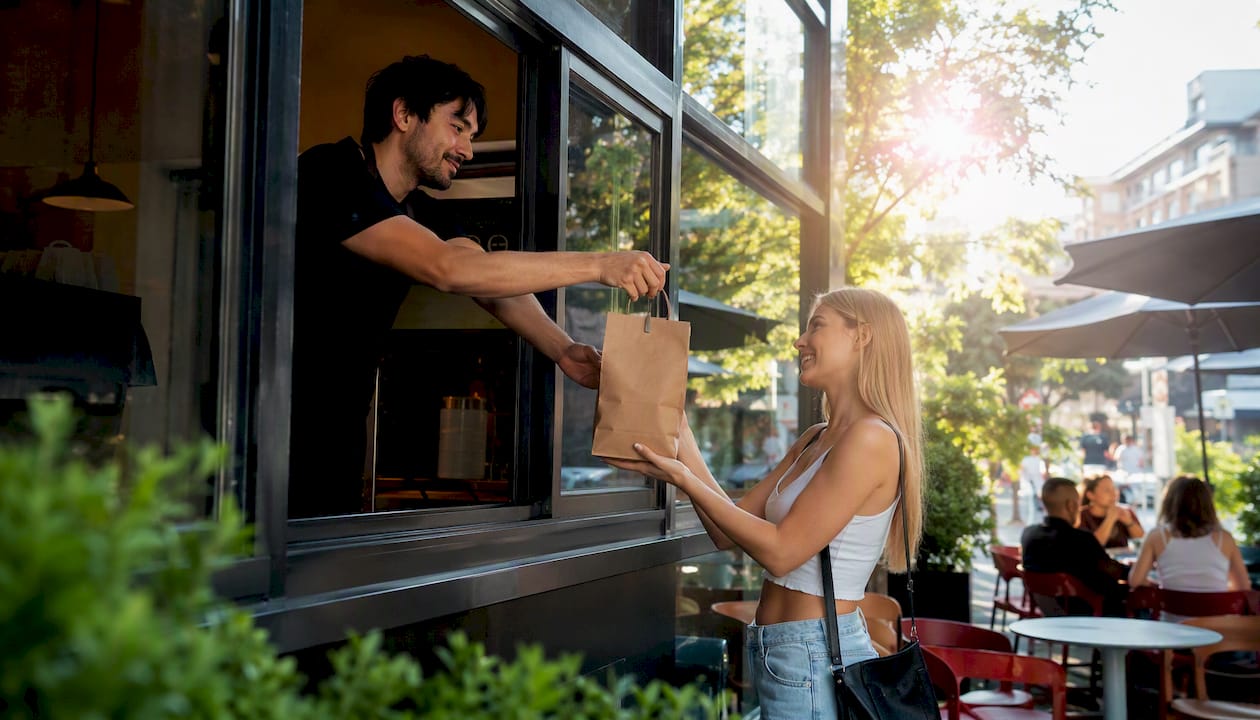
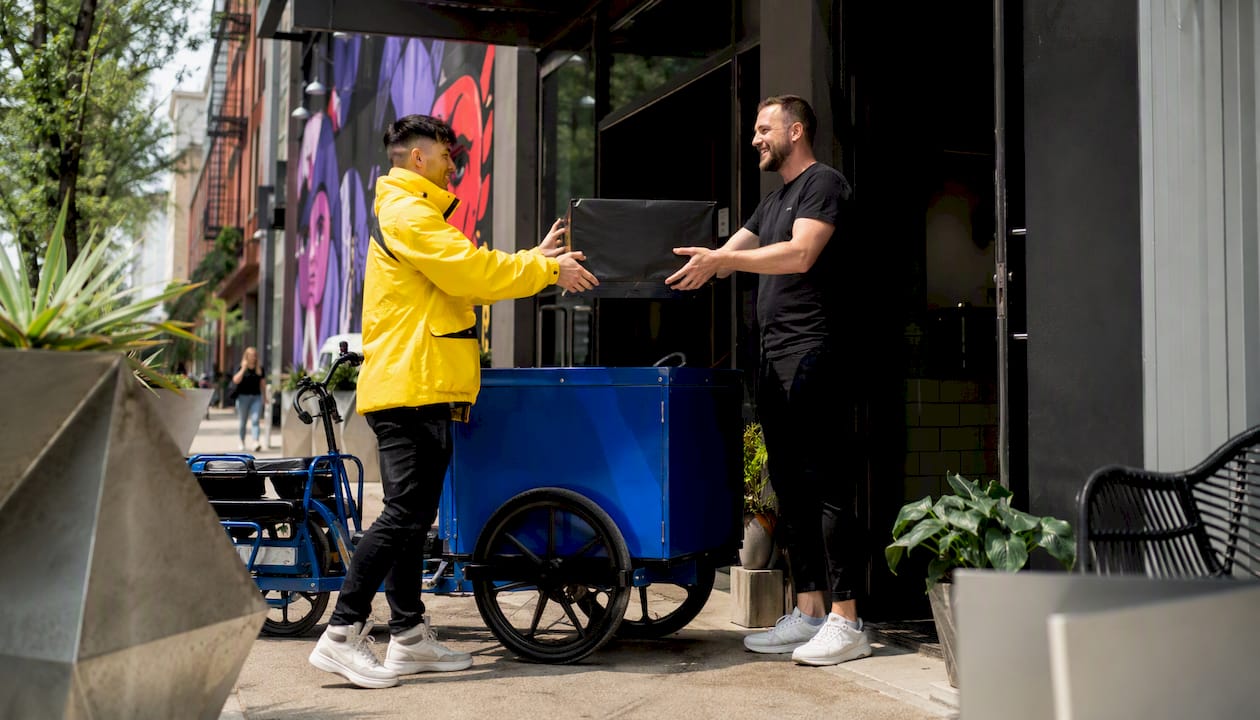
Curbside is the simplest fast pickup type: the customer orders online, drives to the store, and a staff member brings the order out. Prep windows typically run minutes to a couple of hours depending on item location and staffing. The key to keeping it fast is pre-staging: orders should move to a dedicated pickup zone the moment they are confirmed, not when the customer calls to say they have arrived.
Retail store pickup programs often support quick readiness windows and curbside options for immediate collection, with some programs notifying customers within minutes of order confirmation.
For bulk curbside pickups, staging matters even more. A pallet of custom apparel sitting in the back of the stockroom is not a staged order. It needs to be at the loading area, labeled, and verified before the customer arrives.
2. How express in-store pickup and BOPIS work
BOPIS speeds up the transaction by removing the browse-and-decide step. The customer picks online, the store fulfills from live inventory, and pickup happens at a dedicated counter or locker. The speed depends almost entirely on inventory accuracy: if the system shows stock that is not actually on the shelf, the order stalls.
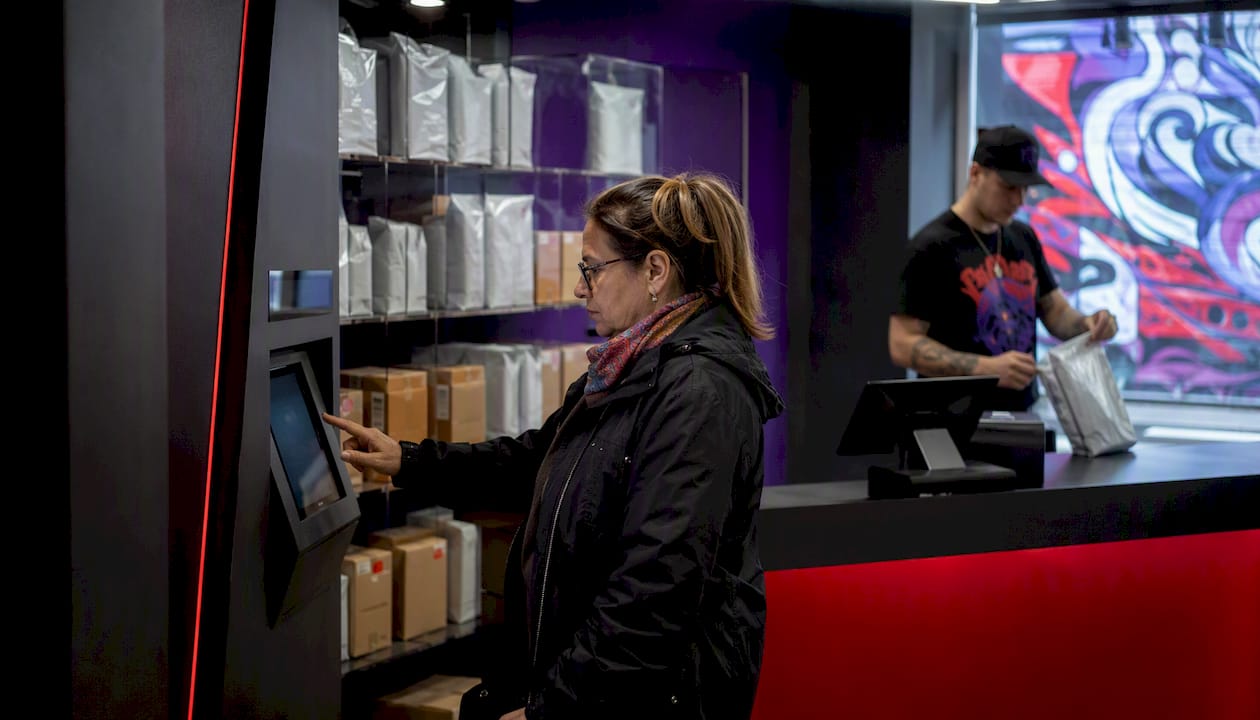
Appointment-based pickup windows help here. Plugins like Local Pickup Plus for WooCommerce let retailers set per-location lead times, cap simultaneous pickups, and restrict which products are eligible for pickup at each location. That prevents the scenario where 15 bulk orders all show up in the same 30-minute window.
3. Lockers and pickup-point systems
Lockers remove the staffing variable entirely. The order goes into a secure compartment; the customer retrieves it with a code at any point during operating hours. Retrieval is instant once the order is loaded, but loading itself can take 2–24 hours depending on the fulfillment cycle.
The main constraint is size. Lockers work well for apparel, accessories, and small parcels. They are not practical for bulk pallet orders or anything requiring a loading dock.
4. Local courier and on-demand pickup for urgent or oversized orders
When speed and size both matter, a local courier or on-demand platform is the right call. Roadie’s retail delivery network offers 2-hour, 4-hour, and end-of-day windows and handles items up to 144 inches and 300 pounds same-day within 100 miles. That covers most bulk apparel orders, furniture, and equipment that national carriers routinely decline.
Pro Tip: Set your published pickup-ready window 15–20 minutes longer than your actual prep time. Customers who arrive early create congestion at staging areas and put pressure on staff to rush verification. A small buffer protects both the customer experience and your error rate.
5. Bulk fulfillment routes: options, tradeoffs, and when to use each
Bulk fulfillment is not just “order more.” The route you choose affects cost per unit, lead time, and how much floor space you need on both ends.
Ship-from-store works when local inventory is already stocked and the buyer is nearby. It cuts lead time to same-day or next-day without touching a distribution center. The requirement: real-time inventory sync. Without it, you will oversell and split orders.
Consolidated parcel or pallet shipping makes sense at higher volumes. Fewer individual shipments mean lower handling overhead and simpler inventory movement, which is the primary operational advantage of bulk buying through consolidation. The tradeoff is lead time: consolidation typically adds 1–3 days versus ship-from-store.
Local courier pickup handles urgent bulk runs or items that exceed standard carrier limits. Cost per order is higher, but for a 50-piece team uniform order needed by Friday, it is often the only option that actually works.
Key tradeoffs at a glance:
- Cost per unit: Consolidation wins at high volume; ship-from-store wins for speed at moderate volume.
- Staging complexity: Pallet consolidation requires loading dock access and packaging materials.
- Fragile or hazardous items: Require dedicated handling; local pickup services fill the gap when national carriers decline the item.
- Split order risk: Ship-from-store requires live inventory; consolidated shipments need confirmed stock before booking.
For bulk printing cost factors specifically, per-unit cost drops significantly as quantity rises, but the fulfillment route you choose affects total landed cost as much as the unit price does.
6. Step-by-step setup for fast pickup and bulk order flows
- Define your pickup types. Decide which of curbside, in-store, locker, and courier you will support. Do not offer all four on day one.
- Set prep-time windows. Assign realistic minimums per product category. Bulk orders need longer windows than single items.
- Configure your POS and checkout. Enable per-location inventory, pickup options at checkout, and order routing rules for ship-from-store.
- Designate staging areas. A labeled zone near the loading area, separate from general stock, prevents mix-ups during busy periods.
- Train staff on pickup verification. Every pickup should require an order code or ID check. Photo proof of pickup is worth adding for high-value bulk orders.
- Set up SMS and email notifications. Real-time tracking via SMS or email is now a baseline customer expectation for any same-day fulfillment program.
Sample SMS template your team can copy:
- Run a dry run before launch. Walk one full order through every step, including the notification, staging, verification, and handoff. Fix signage gaps before customers find them.
7. Typical costs and timeline expectations
| Option | Typical timeline | Cost shape | Bulk discount available? |
|---|---|---|---|
| Curbside / in-store pickup | 30 min–2 hours | Free or low fixed fee | Depends on retailer |
| Locker pickup | 2–24 hours | Free or small fee | Rarely |
| Local courier same-day | 2 hours–end of day | Per-order fee, higher cost | Sometimes for volume |
| Ship-from-store | Same day–next day | Included in order cost | Yes, at volume |
| Consolidated parcel | 1–3 days | Per-unit drops with volume | Yes, tiered |
| Consolidated pallet | 2–5 days | Lowest per-unit at high volume | Yes, significant |
Bulk discount structures often separate product discounts from shipping discounts, with different eligibility thresholds for each. Tiered bulk discount programs typically apply automatically at qualifying quantities, but minimum order sizes and eligible destinations vary by provider.
A simple heuristic: if you are ordering fewer than 12 units and need them today, local pickup or same-day courier beats consolidation every time. Above 50 units with a 3-day window, consolidated shipping almost always wins on cost.
8. How to choose the right carrier or last-mile solution
Decision criteria, in order of priority:
- Size and weight: Oversized items (over 70 lbs or 108 inches in combined girth) exceed standard carrier limits. Use a local courier or on-demand platform.
- Fragility: Local providers with dedicated routes and real-time tracking handle fragile items more reliably than national carriers sorting through high-volume hubs.
- Required window: 2-hour delivery requires a local on-demand platform. Next-day is achievable with most national carriers.
- Local geography: Loading zones, vehicle access restrictions, and curbside regulations vary by municipality. Confirm access before booking a large vehicle for a downtown pickup.
| Carrier type | Size limit | Speed | Best for |
|---|---|---|---|
| National carrier (UPS, FedEx) | Up to 70 lbs | Next day–3 days | Standard parcels |
| On-demand local (e.g., Roadie) | Up to 300 lbs, 144" | Same day, 2–4 hour windows | Oversized, urgent |
| Local errands / proxy service | Varies | Same or next day | Out-of-area buyers, specialty items |
| Ship-from-store | No carrier limit | Same day | Local stock, retail fulfillment |
Local errands and proxy pickup services are worth knowing about for out-of-area buyers: they confirm item security, coordinate with the seller, and hand off to a carrier or buyer, often same-day in metro areas.
9. Common problems and how to fix them
- Stock mismatch: Reserve inventory the moment an order is placed, not when it is picked. A 15-minute hold window without confirmation should auto-cancel and restock.
- Pickup fraud: Require an order code plus a matching name for every pickup. For bulk orders over a set value, add photo proof of handoff.
- Staging congestion: Cap simultaneous pickup appointments. Three bulk orders arriving at once with no staging space creates errors and delays.
- Carrier exceptions: Hazardous materials, oversized items, and fragile goods often require customer pickup or a dedicated local courier. Build this into your order flow as an automatic flag, not a manual exception.
- Split orders: Confirm full stock availability before accepting a bulk order. Partial fulfillment on a 100-piece team order is worse than a 2-day delay.
Pro Tip: For bulk pickups involving multiple boxes or garment bags, assign one staff member as the handoff lead. That person checks the order against the packing list, hands over the items, and logs the pickup. Splitting that responsibility across two people is where errors happen.
Key takeaways
Fast local pickup and bulk order efficiency come down to three things: accurate inventory, realistic prep-time windows, and SMS or email notifications that keep customers informed before they arrive.
| Point | Details |
|---|---|
| Fastest consumer option | Curbside or express BOPIS gets most orders ready in 1–2 hours when inventory is pre-staged. |
| Best bulk route by volume | Under 12 units, use local pickup or same-day courier; over 50 units with lead time, consolidate. |
| Communication is non-negotiable | SMS/email notifications with order codes reduce early arrivals, congestion, and verification errors. |
| Inventory sync is the foundation | Ship-from-store and BOPIS both fail without real-time inventory accuracy at the location level. |
| Torontocustomtshirts for custom apparel | Offers bulk order discounts, rush turnaround, and local pickup in Mississauga for teams, events, and businesses. |
What fast pickup actually teaches you about your operation
The businesses that get fast pickup right are not the ones with the most technology. They are the ones that made a decision about what they would actually commit to, then built the process around that commitment.
Most retailers try to offer every pickup type at once and end up doing all of them poorly. Curbside with no staging zone. BOPIS with inventory that is three days out of date. Same-day courier for items the courier cannot legally transport. The result is a customer who drove across town for an order that is not ready.
The smarter move is to pick one or two pickup types, nail the prep-time window, and send the SMS notification before the customer even thinks to check. That single operational discipline, communicated clearly, builds more loyalty than any discount.
Bulk orders add a layer: the coordination between the person placing the order and the person doing the pickup is often where things break. A 50-piece apparel order for a corporate event needs a named contact, a confirmed pickup time, and a packing list the pickup person can verify on the spot. Without that, you get a van driver standing at a loading dock with no one to sign off and no way to confirm the count.
The technology helps. Appointment caps, inventory sync, and SMS templates all reduce friction. But they are tools that support a process, not a substitute for one.
Torontocustomtshirts: bulk custom apparel with local pickup in the GTA
If your bulk order is custom apparel, printed uniforms, or branded team gear, Torontocustomtshirts skips the complexity of coordinating a separate fulfillment provider. You get full-color DTF printing, live design preview, and volume pricing that scales from a single shirt to a corporate run, with local pickup available in Mississauga.
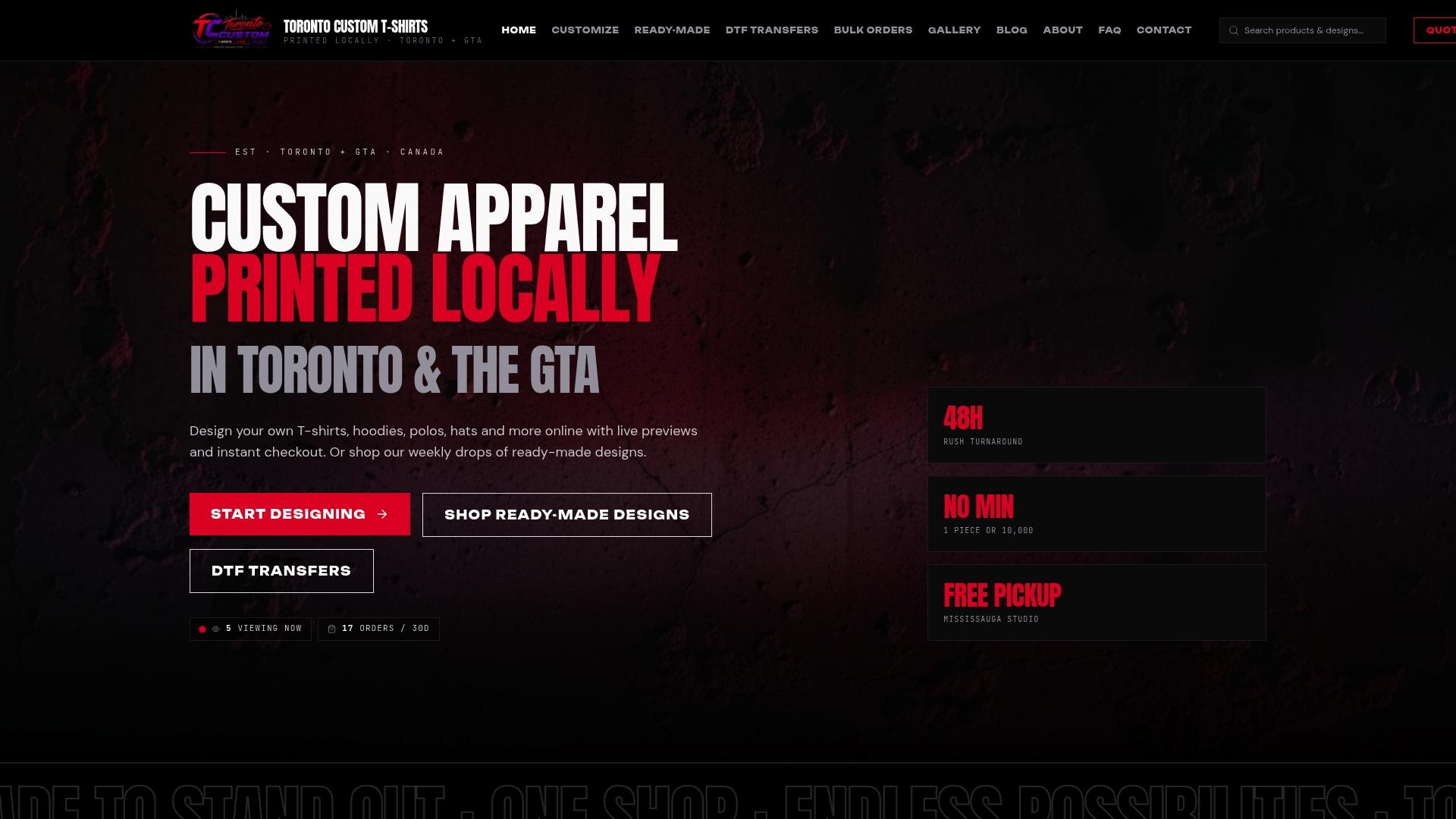
For event organizers and business buyers, the bulk order process includes a quote, artwork review, and a confirmed pickup window, so you are not guessing at timelines. Rush turnaround is available for tight deadlines. Toronto and GTA customers can place orders online and coordinate pickup directly, with no third-party courier required for local collection. Get a bulk quote at torontocustomtshirts.ca/bulk-orders and confirm your pickup window before your next event or team order.
Useful sources
| Source | Best for |
|---|---|
| Roadie — retail delivery solutions | Same-day and oversized last-mile delivery windows, ship-from-store strategy |
| WooCommerce — Local Pickup Plus | Technical setup for multi-location pickup, appointment caps, and per-location inventory |
| Printful — bulk order discount policy | How product and shipping discounts apply separately in bulk fulfillment |
| Printify — bulk discounts explanation | Tiered discount structures and minimum quantity rules |
| FasterCapital — consolidation strategy | Operational benefits of supply-chain consolidation for bulk buyers |
| On Time Delivery & Warehouse — local pickup & delivery | Last-mile reliability, real-time tracking, and dedicated route advantages |
| ConnectShip — Roadie carrier info | Carrier exceptions, oversized and fragile item handling |
| TYMLI Errands — local pickup & shipping assistance | Proxy pickup services for out-of-area buyers and specialty items |
| CVS store pickup | Retail curbside and in-store pickup program examples |
Recommended
Get pricing in 24h.
Toronto-based, no minimums. Tell us about your project and we'll email a detailed quote within one business day.
Request a Quote