Single Shirt Printing Options: A Practical Guide
Explore the best single shirt printing options in our practical guide. Learn about DTG, DTF, and more to customize your perfect garment!
Single Shirt Printing Options: A Practical Guide
Single shirt printing is defined as the production of one custom garment using digital printing methods that require no minimum order and no screen setup. Direct-to-Garment (DTG) and Direct-to-Film (DTF) printing are the two dominant methods for single shirt printing options today. Both technologies let you print full-color, photo-quality designs on a single garment at a cost that screen printing cannot match for one-off orders. Whether you need a birthday gift, a branded promotional shirt, or a limited-edition piece, understanding how each method works will save you time, money, and frustration.
1. What are the top single shirt printing options?
The four main methods for printing a single custom shirt are DTG, DTF, heat transfer vinyl (HTV), and screen printing. Each suits different design types, fabric choices, and budgets. Knowing which one fits your project is the first decision you need to make.
Direct-to-Garment (DTG)
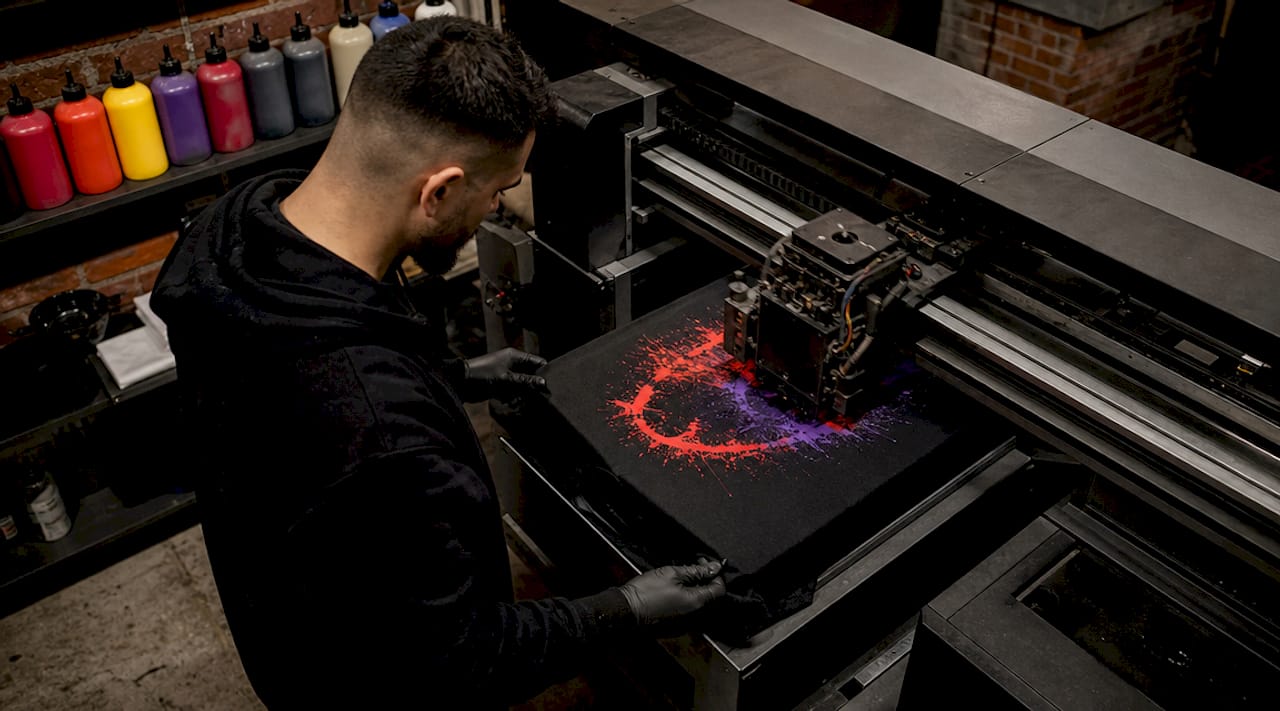
DTG printing sprays water-based inks directly onto fabric, treating the garment like a sheet of paper. It handles full-color photographic designs with no setup fees and no minimum order. DTG performs best on 100% ring-spun cotton, where ink absorbs evenly and colors stay vibrant.
Direct-to-Film (DTF)
DTF uses a transfer film to carry the design, which is then heat-pressed onto the garment. This method works on cotton blends, polyester, and synthetic fabrics that DTG cannot handle well. DTF delivers durable, vibrant color across a wider range of fabric types, making it the go-to for mixed-fiber or performance shirts.
Heat Transfer Vinyl (HTV)
HTV cuts designs from colored vinyl sheets and presses them onto fabric with heat. It works best for simple text, logos, or designs with a limited number of solid colors. HTV is affordable and fast, but it cannot reproduce photographic detail or gradients.
Screen printing
Screen printing is not practical for a single shirt order. Each color requires a separate mesh screen, and setup fees alone can exceed the cost of the shirt itself. Screen printing becomes cost-effective only at medium to large volumes, typically 50 or more units.
Pro Tip: If your design has more than three colors or includes a photo, choose DTG or DTF. HTV is the right call only for simple, bold graphics.
2. How to prepare your design for single garment printing
Artwork quality determines print quality. A great design on a low-resolution file will look blurry on fabric. Getting this step right before you submit anything is the single most effective way to avoid reprints.
Here is the preparation process in order:
- Use vector files when possible. Vector formats like AI and PDF scale without pixelation, making them ideal for crisp, professional results at any print size. They are the preferred format for logos and text-heavy designs.
- Use 300 DPI PNG for raster artwork. If your design includes photos or complex illustrations, export at a minimum of 1,500 x 1,500 pixels at 300 DPI. Anything below this threshold risks visible pixelation on the finished shirt.
- Check your color mode. Print files should be in RGB for DTG and DTF. CMYK files can shift color during the printing process, so confirm the color mode before uploading.
- Choose the right fabric for your method. DTG on 100% ring-spun cotton produces the best color vibrancy and sharpness. Blends and synthetics absorb ink differently and can produce duller results with DTG. If your shirt is a polyester blend, DTF is the better choice.
- Review the digital proof carefully. The proof approval step is your last chance to catch placement errors, color issues, or sizing problems before production begins. Never skip it.
Pro Tip: Send your printer a transparent-background PNG or a layered AI file. Flat JPEGs with white backgrounds create extra work and can cause white halos around your design on dark shirts.
3. What does the single custom shirt printing process look like?
Ordering a single custom shirt follows a four-step process: select your garment, submit your artwork, choose your print method, and approve the digital proof. Each step affects the final result, so none of them should be rushed.
Garment selection matters more than most customers expect. The shirt style, fabric weight, and color all influence which printing method works best and what the final print will look like. A 100% cotton Gildan or Bella+Canvas shirt is a reliable starting point for DTG. A moisture-wicking athletic shirt requires DTF.
Artwork submission is where most orders go wrong. Files that are too small, in the wrong format, or have embedded white backgrounds cause delays and quality issues. Submitting the correct file the first time keeps your order on schedule.
The proof review is the final checkpoint. A digital proof shows design placement, color representation, and print dimensions before any ink touches fabric. Approving a proof without checking these details carefully is the most common reason customers are unhappy with their finished shirts.
4. What does a single shirt order cost?
Single shirt printing costs more per piece than bulk orders, and that is expected. The absence of setup fees in DTG and DTF keeps the cost reasonable, but you are still paying for individual print time and materials.
Key cost factors include:
- Print method. DTG and DTF carry no setup fees. Typical single shirt prices range from $15 to $30 or more depending on method, design complexity, and garment style.
- Design complexity. Full-color photographic prints take longer to process and use more ink than simple two-color logos. More complex designs cost more.
- Garment style and color. Premium blank shirts cost more than standard options. Dark garments printed with DTG require a white underbase layer, which adds print time and cost.
- Print area. A full front and back print costs more than a left-chest logo. Larger print areas use more ink and take more time.
- Turnaround time. Rush orders typically carry a premium. Standard production for a single shirt is usually one to three business days, with shipping on top of that.
One detail that surprises many customers: DTG on dark garments requires pre-treatment with a white underbase to make colors pop. This step adds time and slightly increases cost, but it is necessary for print opacity on black or navy shirts.
5. Which printing method fits your use case?
The right method depends on what you are printing, what you are printing it on, and how long you need it to last. Here is how the main options align with common scenarios.
| Use Case | Best Method | Why |
|---|---|---|
| Photo or full-color design on cotton | DTG | Best color detail on 100% cotton fabric |
| Design on polyester or blend | DTF | Broader fabric compatibility, durable transfer |
| Simple logo or text, few colors | HTV | Fast, affordable, clean edges on solid designs |
| Large volume order (50+ units) | Screen printing | Cost drops significantly at scale |
| Dark shirt with detailed design | DTG with underbase | Opacity requires white base layer |
For personal gifts and one-off keepsakes, DTG is the most popular choice because it handles photographic detail and requires no minimum order. For promotional shirts on athletic or synthetic fabrics, DTF printing is the stronger option. For event staff shirts with a simple logo, HTV delivers fast results at a low cost.
Durability also varies by method. DTG prints are embedded in the fabric and hold up well through regular washing when cared for properly. DTF transfers sit on top of the fabric and are highly durable, but they can crack over time if exposed to high heat in the dryer. HTV is durable for simple designs but can peel at the edges if the application is not done correctly.
- DTG: best for detail, cotton only, embedded ink
- DTF: best for fabric variety, durable transfer film
- HTV: best for simplicity, fast turnaround, solid colors
- Screen printing: best at volume, not for single pieces
Pro Tip: For a single shirt that needs to last through heavy use, ask your printer whether they recommend DTG or DTF for your specific fabric. The answer depends on the shirt, not just the design.
Key takeaways
The most effective single shirt printing method is DTG for cotton garments and DTF for synthetic or blended fabrics, with artwork quality being the deciding factor in final print results.
| Point | Details |
|---|---|
| DTG is best for cotton | DTG delivers the sharpest color on 100% ring-spun cotton with no setup fees. |
| DTF handles more fabrics | DTF works on polyester, blends, and synthetics where DTG underperforms. |
| Artwork resolution matters | Submit vector files or 300 DPI PNG files to avoid pixelation on the finished shirt. |
| Proof approval is non-negotiable | Always review the digital proof to catch placement and color errors before printing. |
| Screen printing is not for single shirts | Setup costs make screen printing impractical for orders under 50 units. |
What I have learned from working with single shirt orders
Working with single shirt orders every day teaches you think that no spec sheet covers. The biggest one: most print problems start with the file, not the printer. Customers submit low-resolution JPEGs, designs with white backgrounds, or files sized for a business card. The printer does their best, but physics limits what any technology can do with a bad source file.
Fabric choice is the second most common source of disappointment. Someone orders a soft polyester blend shirt because it feels great, then wonders why the DTG print looks faded. The answer is always the same. Cotton absorbs water-based ink. Polyester repels it. Matching your method to your fabric is not optional. It is the foundation of a good result.
The design mistakes that wreck custom shirts are almost always avoidable. Skipping the proof, ignoring the underbase requirement on dark shirts, or choosing HTV for a 12-color gradient design are all decisions that create problems downstream. The process works when you follow it in order.
My honest advice: communicate with your printer before you finalize anything. Tell them what fabric you have, what the design looks like, and what the shirt is for. A good printer will tell you which method fits your situation. That conversation costs nothing and saves a lot of frustration.
— Toronto
Torontocustomtshirts: your single shirt printing partner
Torontocustomtshirts prints single custom shirts with no minimum order requirement, full-color DTG and DTF options, and professional proofing on every order. You do not need to buy a dozen shirts to get one made right.
Whether you need a personalized gift, a branded shirt for an event, or a sample before a bulk run, Torontocustomtshirts handles it from artwork review to finished product. Local pickup is available in Mississauga, and the team works with both personal and business orders of all sizes. Visit the Toronto custom shirt printing page to start your order, or reach out directly for help choosing the right method for your design and fabric. Fast turnaround and clean print quality are standard, not an upgrade.
FAQ
What is the best printing method for a single custom shirt?
DTG is the best method for a single custom shirt printed on 100% cotton, offering full-color detail and no setup fees. DTF is the better choice for synthetic or blended fabrics.
How much does it cost to print one custom shirt?
Single shirt printing typically costs between $15 and $30 or more, depending on the print method, design complexity, garment color, and print area size.
What file format should I use for single shirt printing?
Vector files like AI or PDF are the best option for logos and text. For photo-based designs, use a PNG file at 300 DPI and at least 1,500 x 1,500 pixels to avoid pixelation.
Can I print just one shirt without a minimum order?
Yes. DTG and DTF printing require no minimum order, making them the standard methods for one-off shirt printing for individuals and small businesses.
Does fabric type affect print quality?
Fabric type directly affects the result. DTG on 100% ring-spun cotton produces the most vibrant colors, while blends and synthetics require DTF for comparable quality.
Recommended
Get pricing in 24h.
Toronto-based, no minimums. Tell us about your project and we'll email a detailed quote within one business day.
Request a Quote